Melissa
Almond
Interior Design Operations Manager
Heading


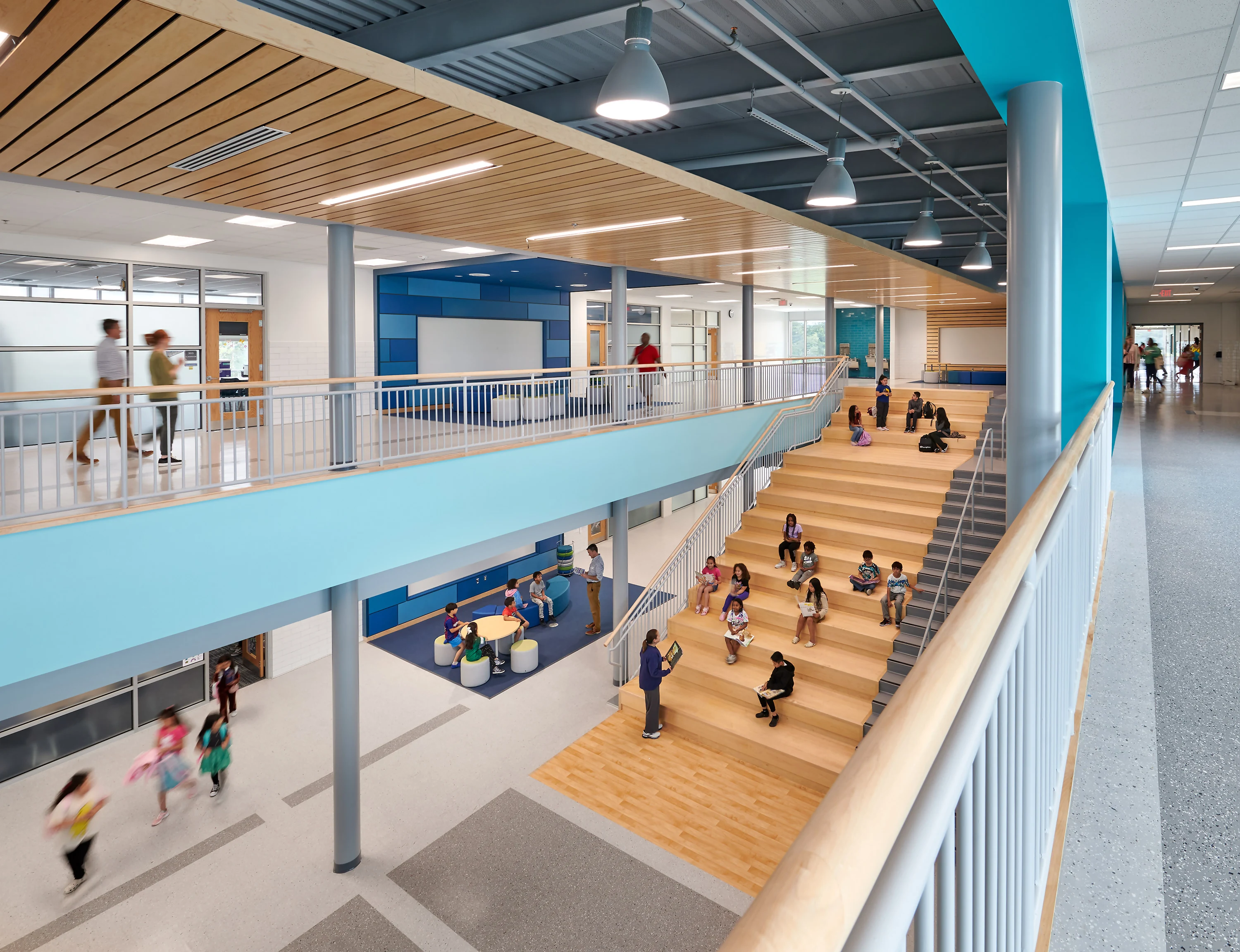
Each classroom wing culminates in a learning commons where students from six surrounding classrooms gather to work together. Distinctive acrylic ribbon elements traverse the commons' ceilings, creating visual interest that sparks imagination. The design team included these architectural features after observing their impact on student engagement in similar spaces.
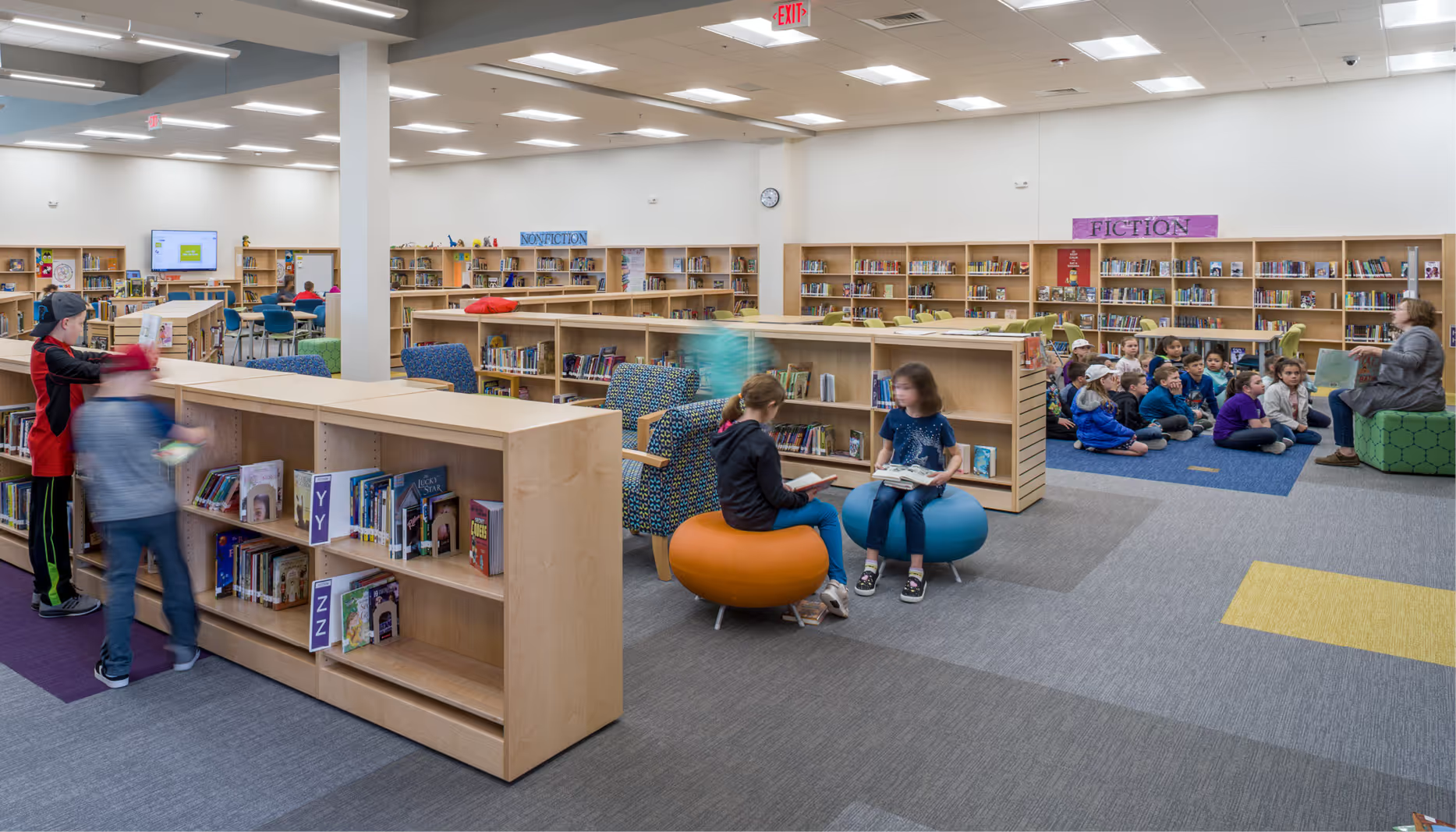
Students absorb information differently, requiring spaces that adapt to various instructional approaches. Movable glass walls allow teachers to expand or contract classroom boundaries as lessons demand. Writing surfaces cover select walls, while furniture arrangements shift to accommodate both individual study and group projects. Reading alcoves, built into upper-level window sills, provide sheltered spots for concentrated work.
Holly Springs exemplifies Wake County's rapid expansion, making scalable school design essential. Buckhorn Creek's initial capacity of 800 students, with core facilities sized for 900, positions the school to accommodate continued enrollment growth. This approach helps WCPSS serve its current 160,500 students while preparing for future increases.
At Buckhorn Creek, the mission to "unlock the treasure in every child" influences every design choice. The school emphasizes communication and responsive teaching methods. Learning clusters—groups of six classrooms surrounding shared commons—facilitate both scheduled collaboration and spontaneous learning opportunities while maintaining clear sight lines for supervision.
Glass framing at corridor ends channels daylight deep into learning spaces, reducing artificial lighting needs. These transparent boundaries create visual links between areas, improving safety while reinforcing the school's emphasis on openness and connection.
Previous successes with the E-plan prototype streamlined the planning process. Community meetings gathered public input, building on residents' familiarity with similar WCPSS facilities. The school's original setting amid farmland simplified site considerations.
WCPSS's decision to apply the E-plan prototype again at Barton Pond Elementary School in Raleigh underscores Buckhorn Creek's achievements. This continued adoption validates the design's ability to meet current needs while adapting to changing educational requirements.