Heading

.webp)
.webp)
Financing combined four percent Low-Income Housing Tax Credit funding with HUD programs, county allocations, and donations from local organizations tied to the project. The resulting $44 million capital stack brought public and private funding together behind one mixed-income development, instead of one income band carrying the project alone. Howard County committed more than $6 million to the project, including gap financing, land acquisition support, and funding for soft costs.
The Autism Society of Maryland and its 12-member Housing Task Force created the original concept to address housing instability among low-income adults with disabilities. Following a competitive selection process, the Task Force chose Mission First Housing Group as developer in 2019, and the organization remains involved with the building and its residents today. The shortage they responded to is not unique to Howard County: a ULI Arizona-led study of autism housing found that most existing models remain isolated, one-off developments rather than a repeatable housing type.
Demand for the finished units was strong enough that the development team held a lottery to select residents from the pool of applicants, which confirmed the need the organization identified years earlier. The project also meets the ongoing need for senior and family housing in Howard County, placing it within reach of daily services rather than apart from them. National surveys, including those conducted by AARP, find that more than 90 percent of older adults prefer to remain in their own homes or communities, a preference Howard County residents consistently express as well.
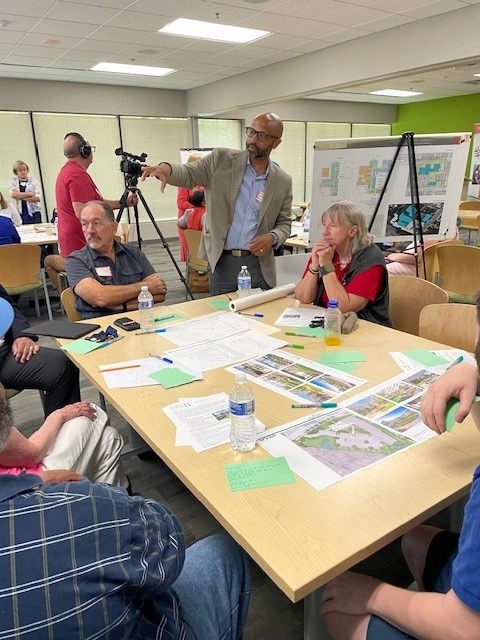
Workshops with the organization and future residents shaped specific features of the building, including the corridor seating niches and decompression areas built for sensory needs. The team also moved the parking area and main entrance to the rear of the site to address neighbor concerns and give residents a quieter approach to the building.
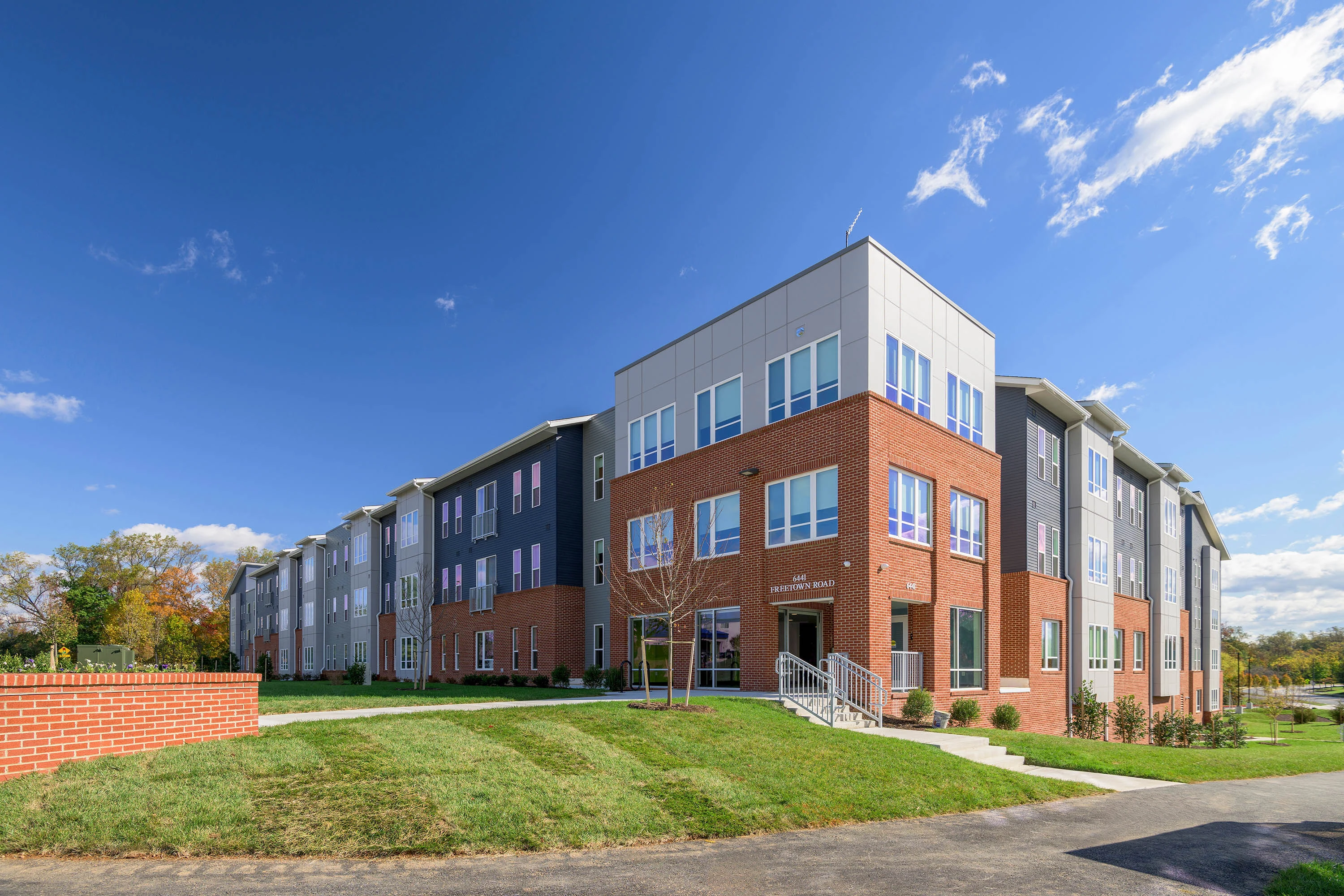
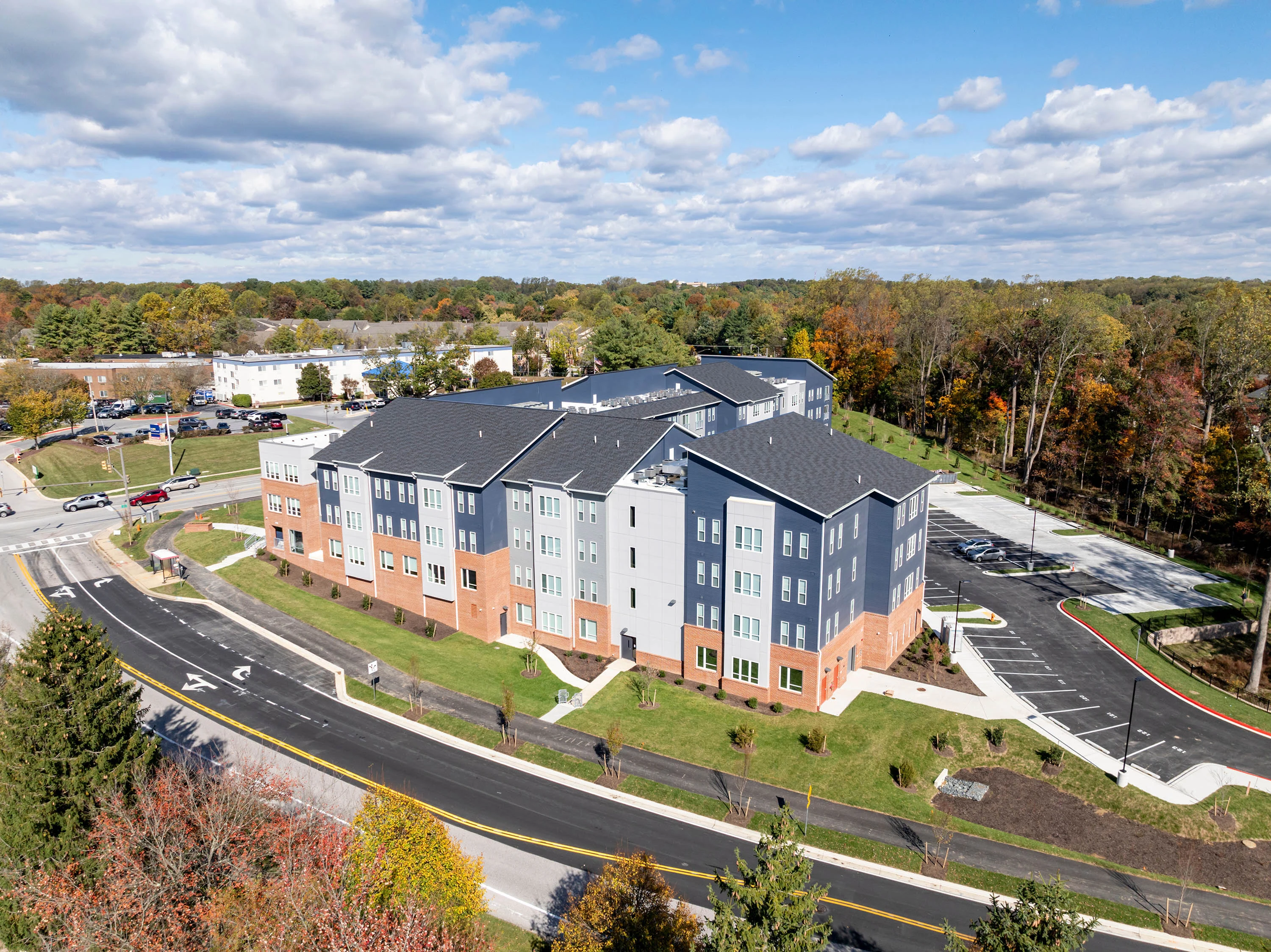
The site sits on a steep hillside. The design tucks a 123-space structured parking garage into the grade, hiding it from the street and allowing three levels of residential space to rise above a concealed lower level. The four-story building reads as three stories from the surrounding street, matching the scale of its context. The result keeps a human-scale street presence even as it meets required density. Shifts in materials and rooflines divide the building’s massing into the character of several smaller structures, an effect reinforced by upgraded signage and landscaping at the pedestrian level.
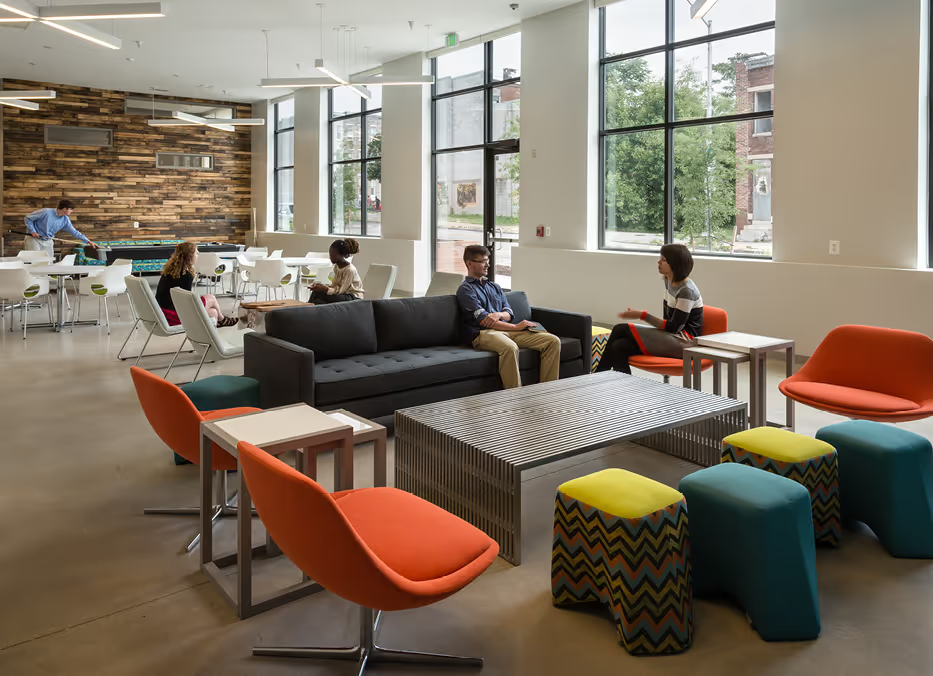
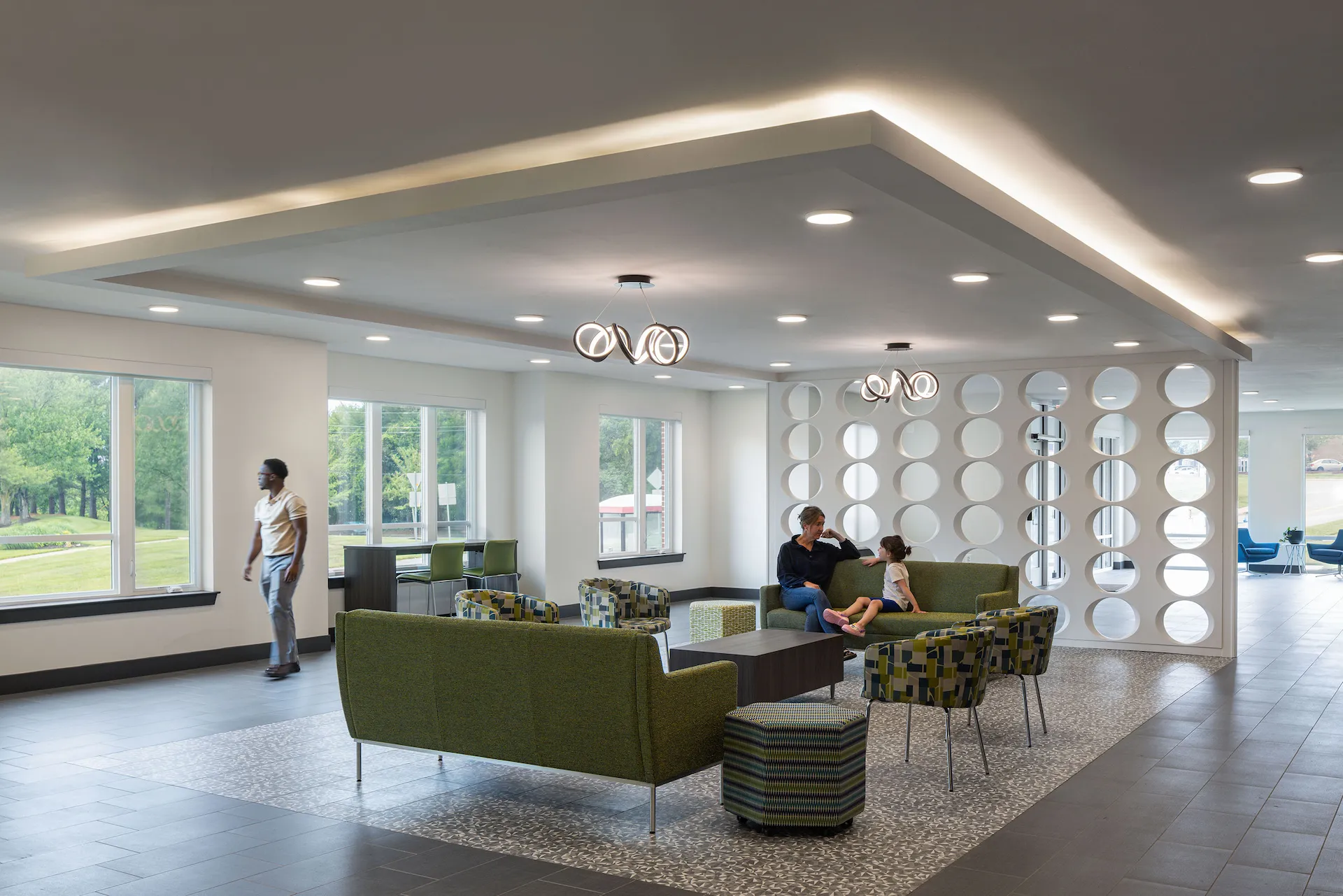
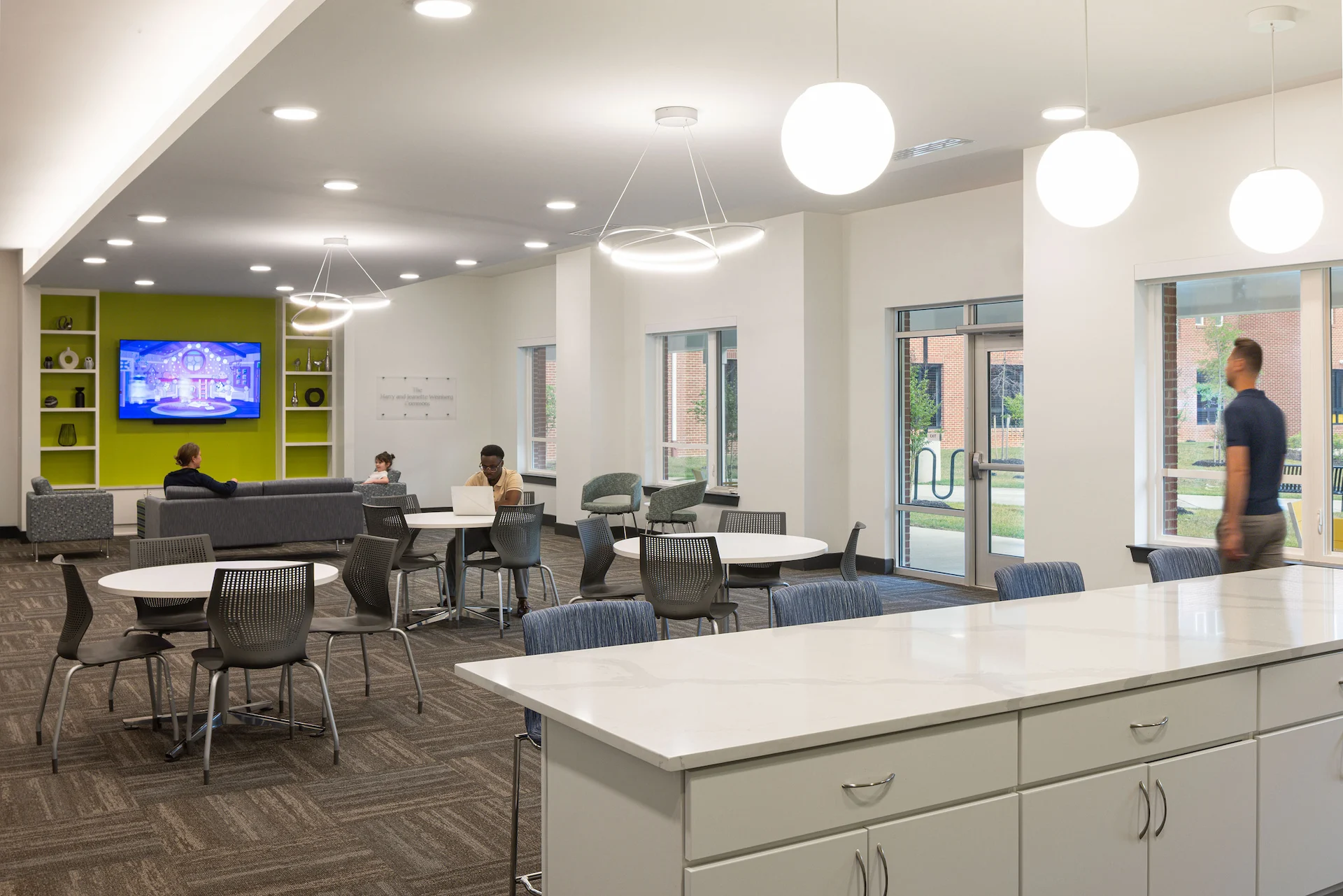
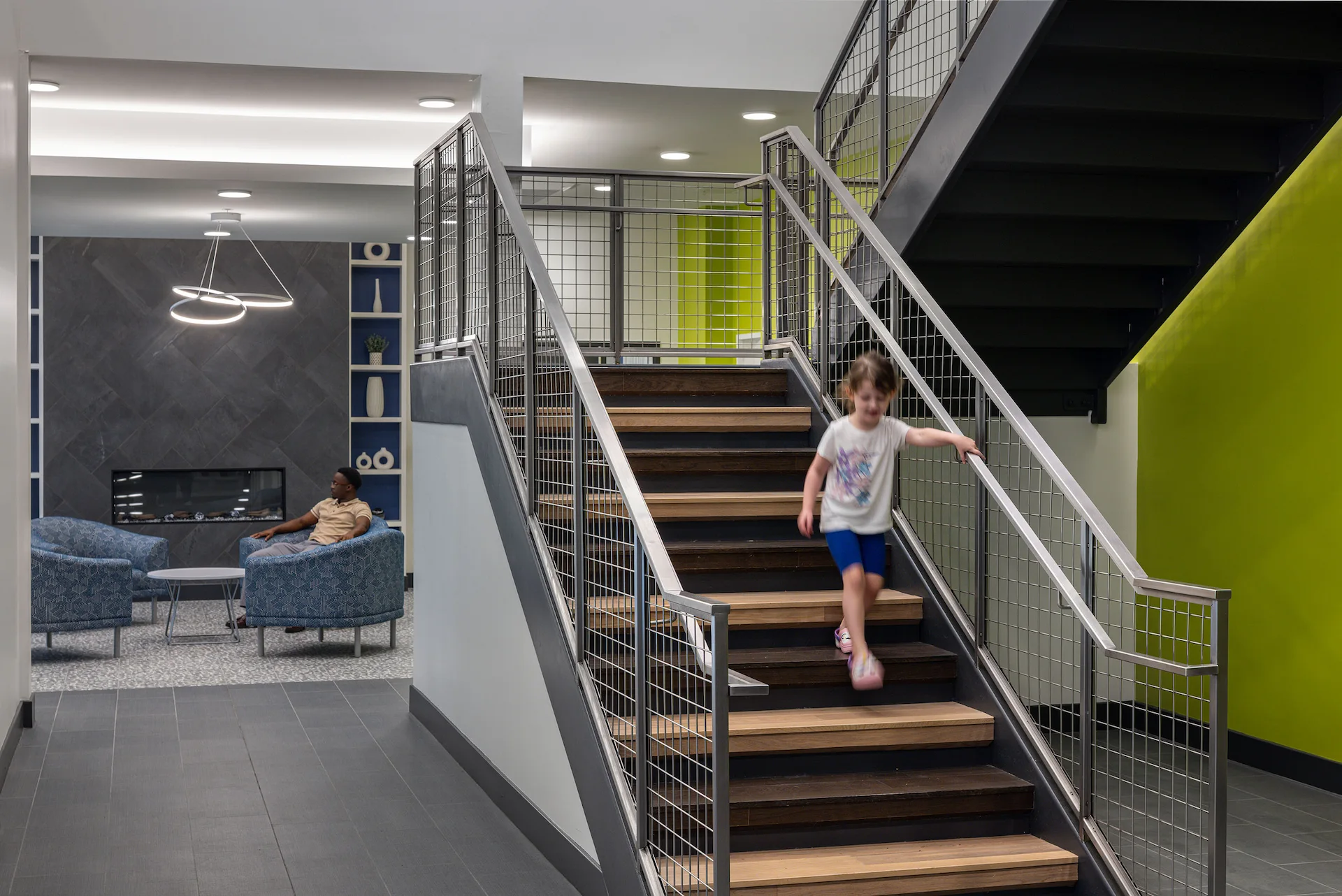
Offset circulation paths and dispersed amenity spaces break long corridors into smaller, distinct areas. The smaller areas support wayfinding and ease the institutional scale common to large residential buildings. A central lounge provides direct access to residential wings, elevators, and management suites. Seating niches and open areas along the corridors give neurodiverse residents a place to decompress and give seniors and families a place to gather, all within the same hallway.
The population mix established above extends to income as well: the very low income disability units sit alongside units for families, individuals, and seniors within the same mixed-income structure. The same social and sensory design principles run through the whole building, not just one specialized wing. The fitness center, business center, and multipurpose rooms sit apart from one another rather than grouped in a single amenity zone, positioning them to encourage spontaneous interaction between residents of different ages and abilities.
Accessibility as a Standard Feature
Removable base cabinets appear in every kitchen, not just the accessible units, and units for residents with hearing and visual impairments include enhanced life-safety and notification devices as standard features throughout the building.