Melissa
Almond
Interior Design Operations Manager
Heading
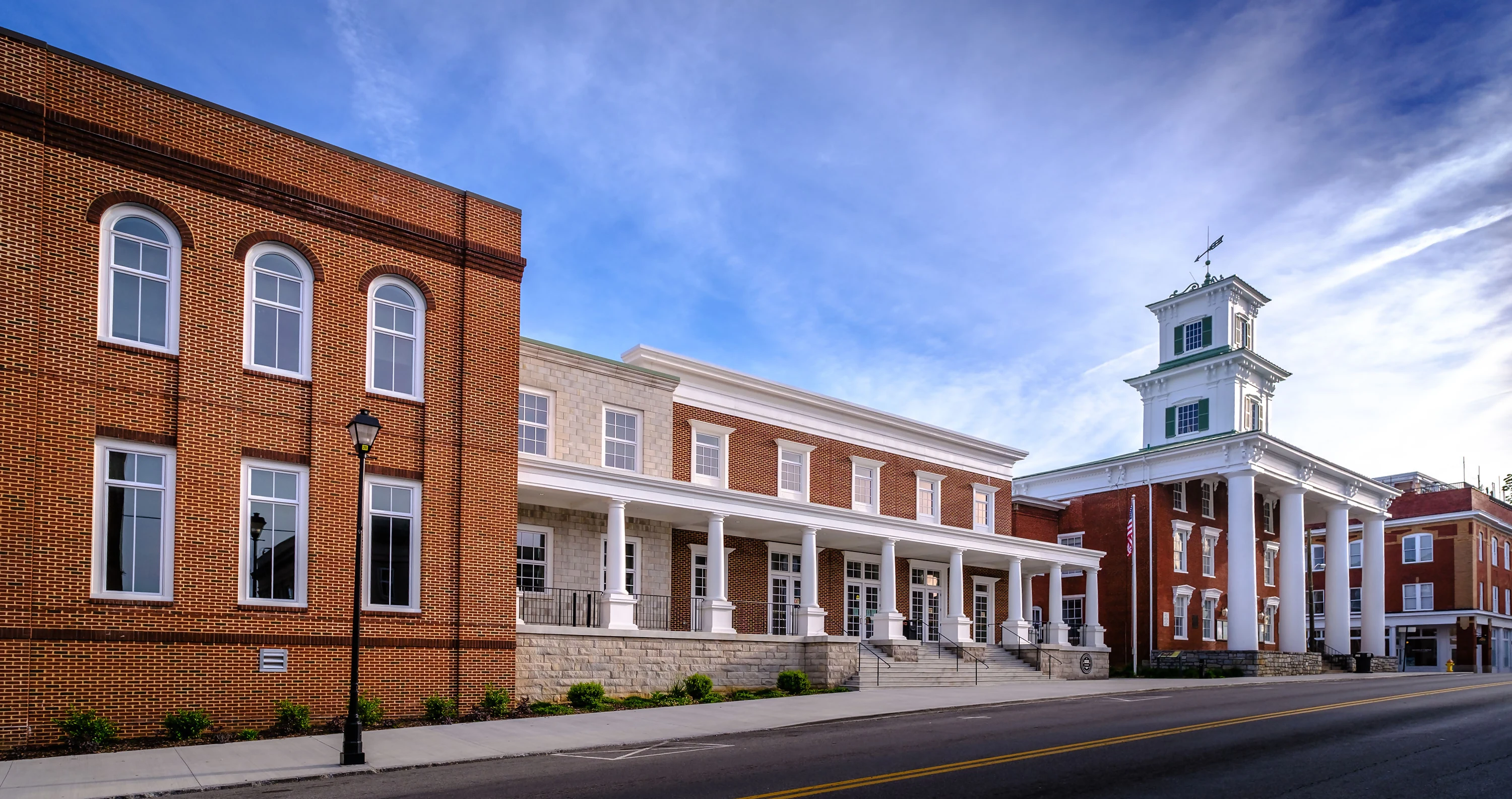
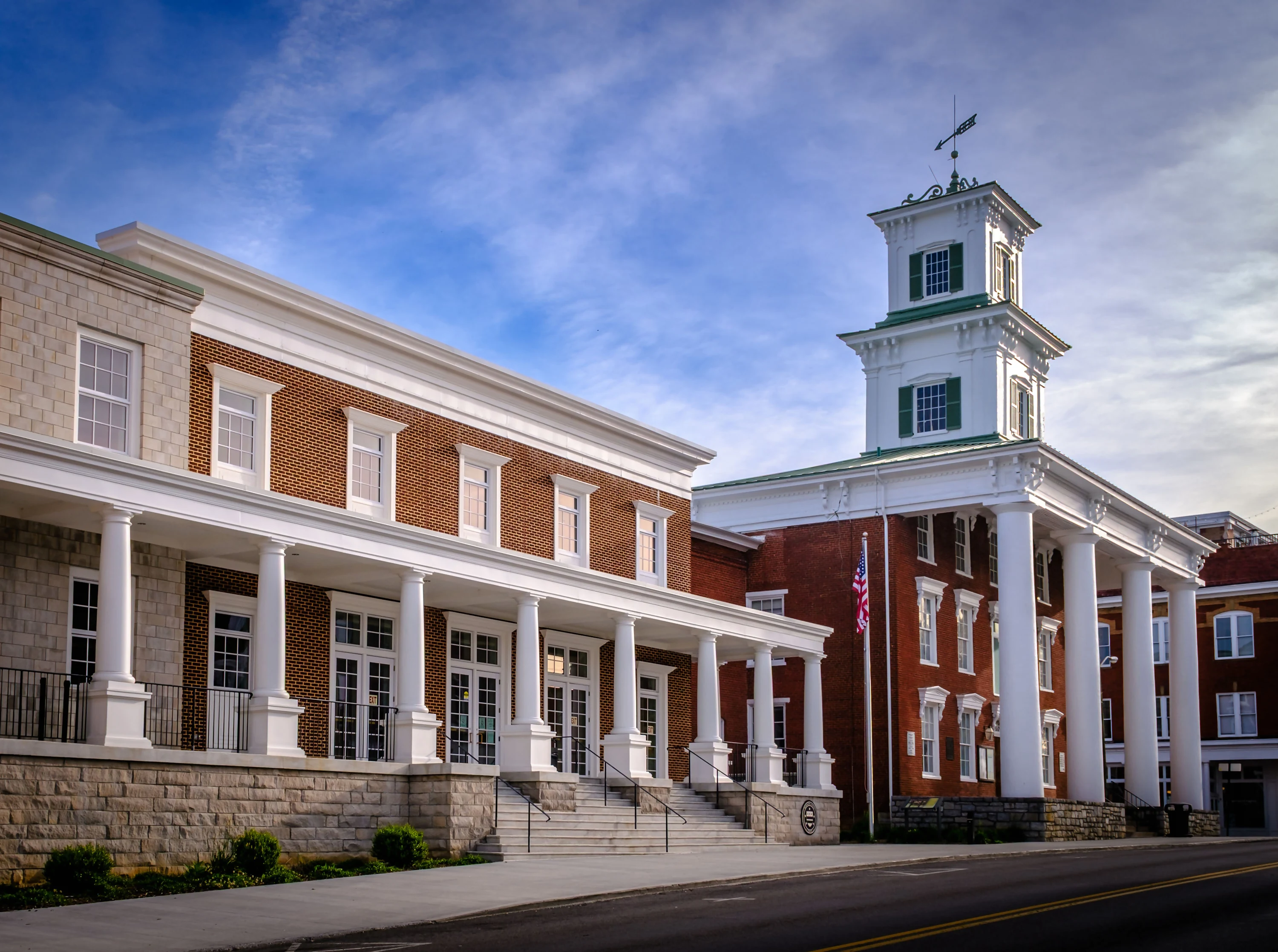
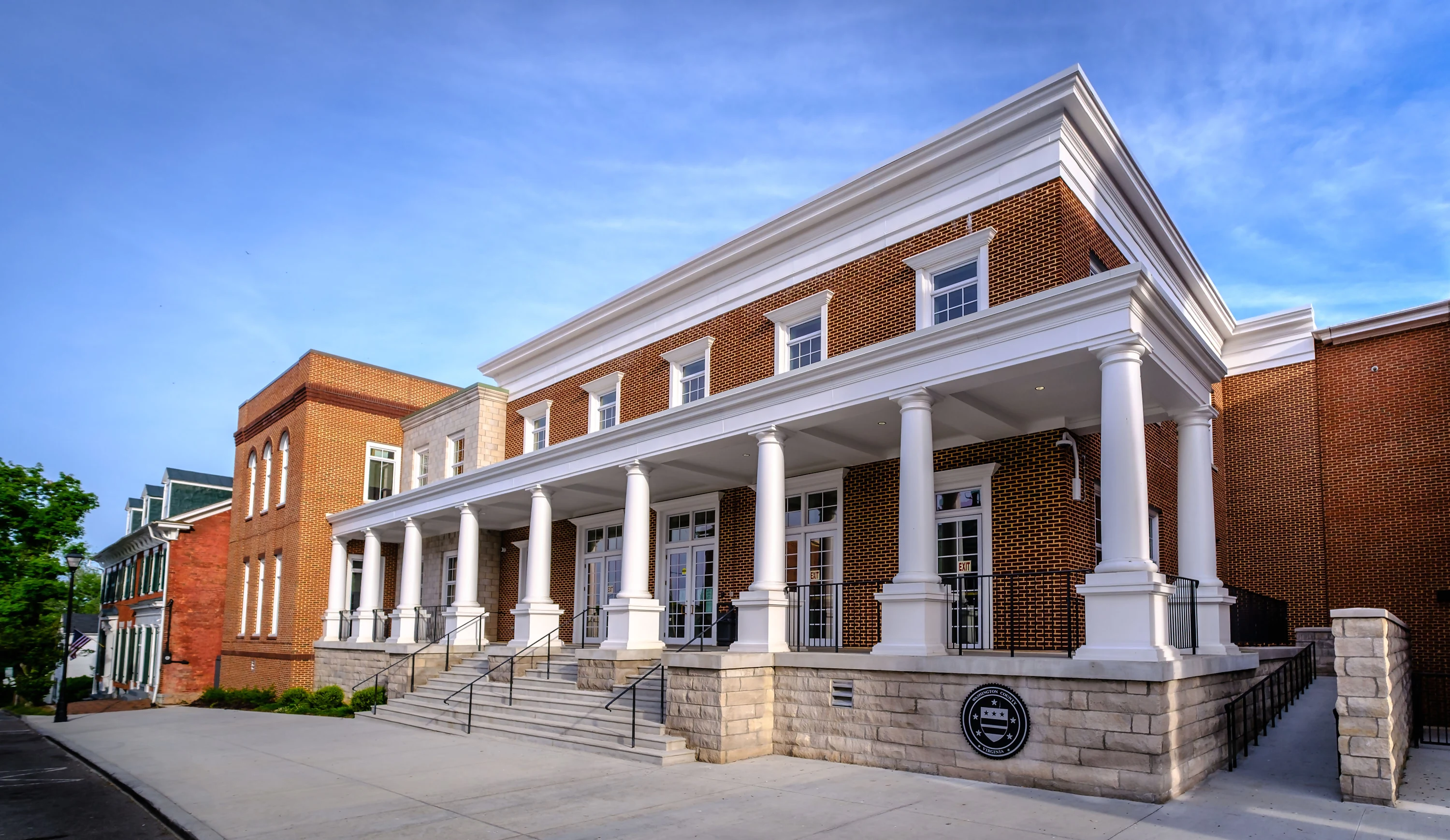
Instead of duplicating the historic courthouse's architecture, the design team took a distinctive approach: creating an addition that respects the original structure through intentional contrast. The new facade splits into distinct modules—preventing the addition from overwhelming its historic neighbor. This modular design reflects downtown Abingdon's existing character, where individual shops and row houses create an approachable urban setting.
Three distinct brick colors combine with stone elements to connect past and present, grounding the building in its surroundings while establishing its own architectural identity.
The renovation eliminated a confusing maze of corridors where judges, staff, detainees, and the public once crossed paths. Separate circulation paths now guide each group through the building. A dedicated secure elevator transports detainees, while staff areas remain protected from public zones.
A new secure parking garage beneath the courthouse gives judges protected access to their chambers, replacing exposed surface parking. A vehicle sally port enables safe transfer of detainees—addressing a previous security weakness.
Adding a floor above existing construction presented significant challenges. The work demanded precise execution, with crews operating within inches of neighboring buildings.
The confined urban site required ingenuity. The construction team placed their tower crane inside a planned elevator shaft, maximizing limited space. This placement, along with precisely timed material deliveries, maintained construction progress despite minimal staging area.
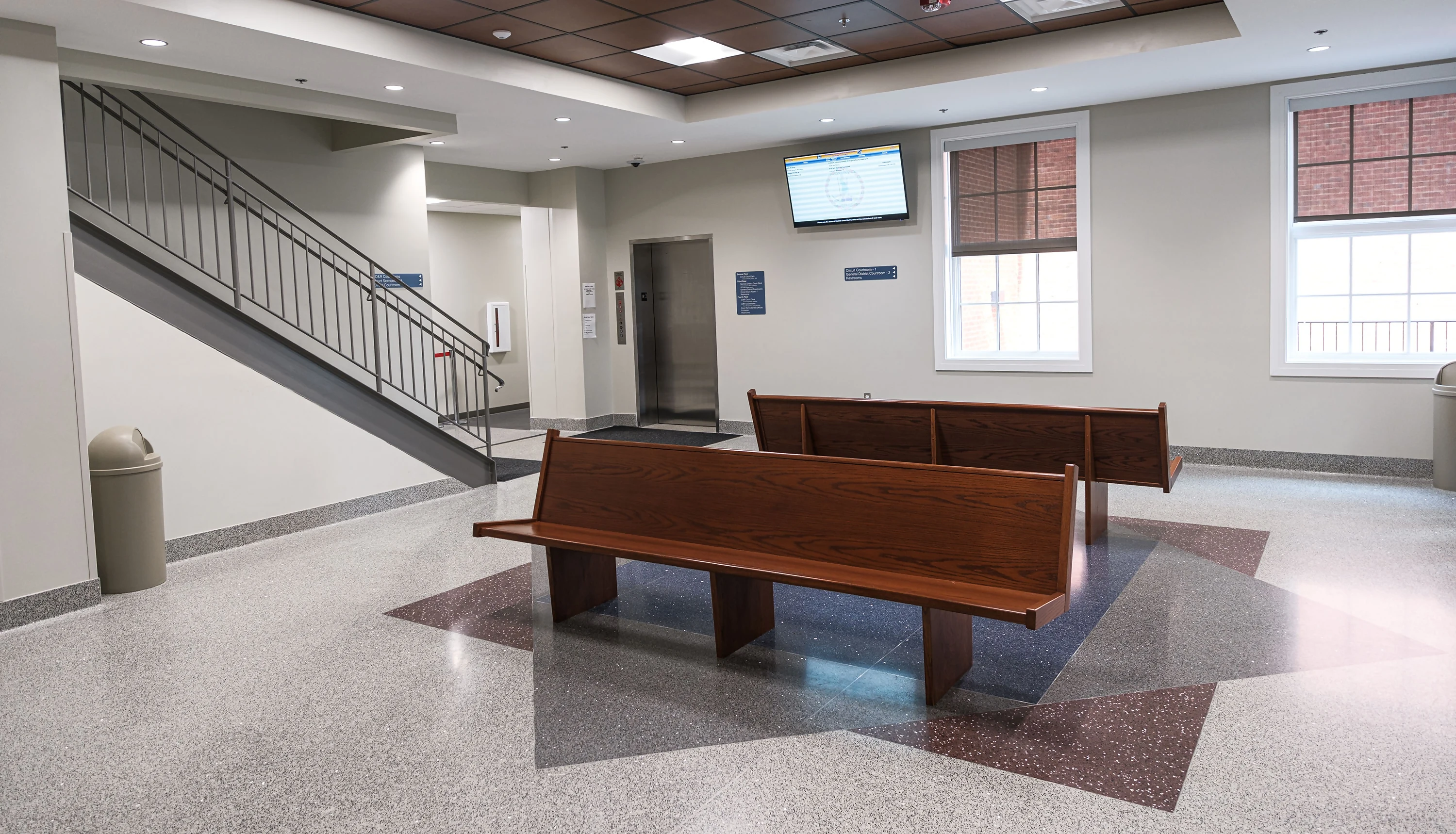
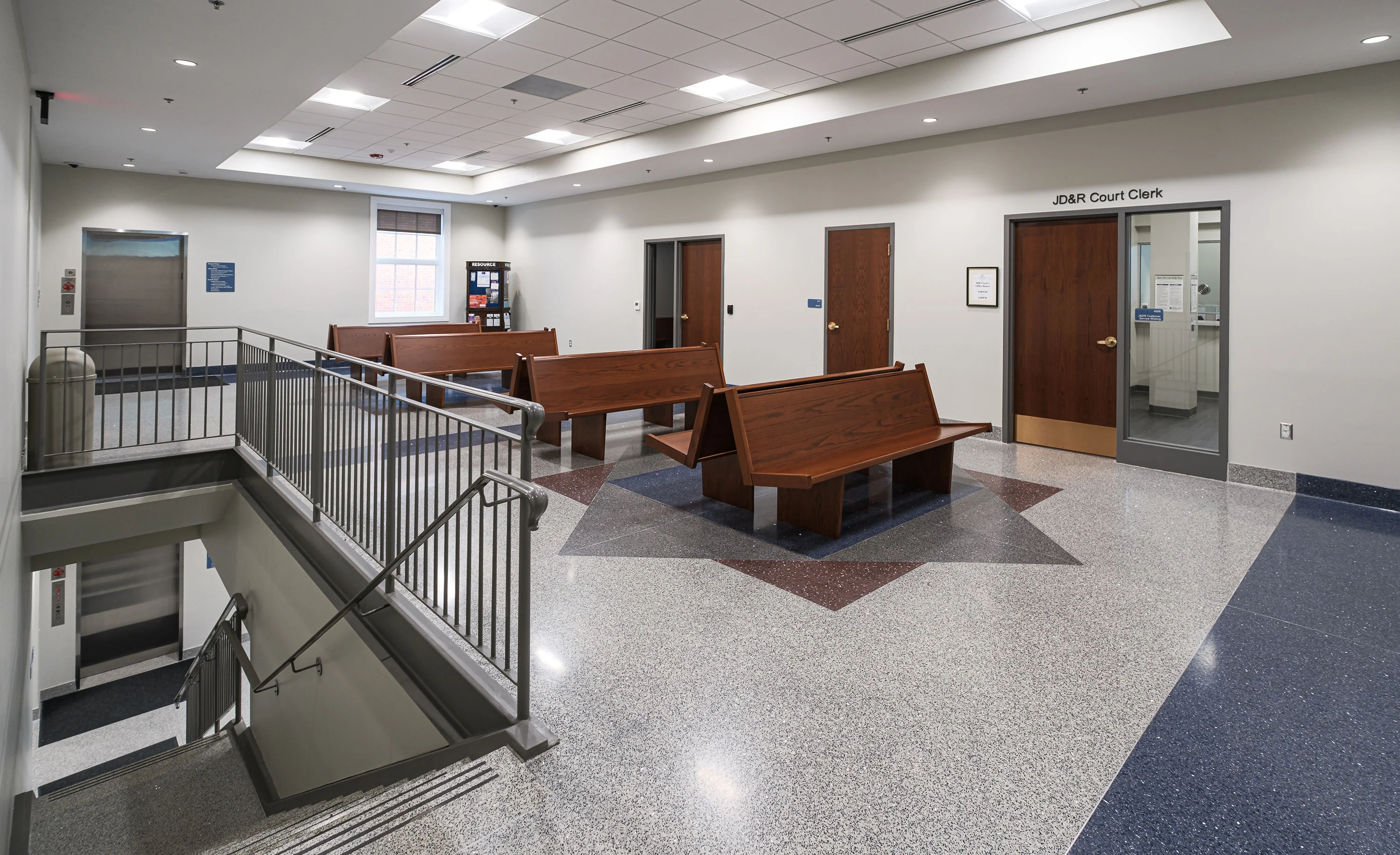
Current judicial processes require specialized spaces. Both courtrooms now have dedicated jury deliberation rooms, and secure chambers protect court personnel. Large windows illuminate public waiting areas without compromising security measures.
A full-building generator system maintains operations during power losses. Every space, from staff workstations to courtrooms, reflects collaboration between designers and court personnel to balance security needs with daily operations.
Maintaining the courthouse downtown preserves both a historic building and Abingdon's civic center. This choice required coordination between the town's Architectural Review Board, neighboring property owners, and multiple stakeholders. Patient discussion and practical solutions satisfied both judicial requirements and community priorities.
As Washington County grows, the courthouse combines historic chambers with new additions to serve justice while preserving local history. The building demonstrates how preservation and progress can strengthen each other, creating a civic space that honors the past while meeting present needs.