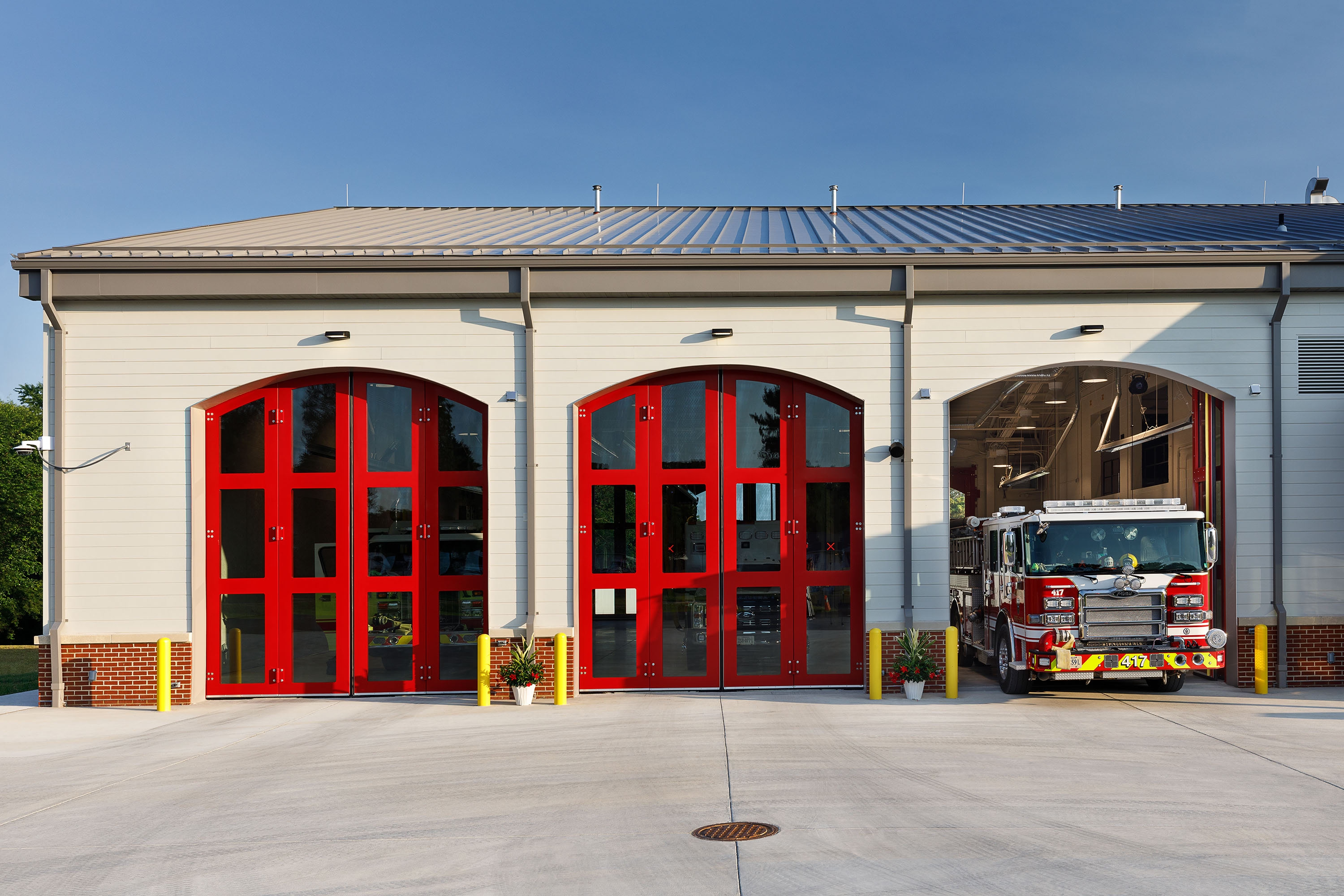
Fire departments across the country face a dual challenge: aging infrastructure that needs replacement and rising cancer rates among firefighters due to carcinogen exposure. At the upcoming Fire Industry Education Resource Organization conference on September 21, 2025, Moseley Principal Chris Roman and Hanover Fire-EMS Battalion Chief Matt Stainback will share how Hanover County addressed both issues through a prototype station design that prioritizes decontamination while creating a replicable blueprint for future construction.
More Than Just a Floor Plan
Prototype fire station design goes beyond creating standardized layouts. Station 17 demonstrates how architectural planning can reduce firefighter cancer risk through circulation patterns that make proper decontamination unavoidable. The design establishes what fire safety experts call “shower within the hour” protocols by controlling how firefighters move through the building after emergency calls.
The layout physically separates contaminated areas from clean living spaces. Firefighters returning from incidents cannot access dormitories, the day room, or kitchen without passing through dedicated decontamination areas equipped with gear extractors and shower facilities. This separation between “hot” and “cold” zones becomes a built-in safety feature rather than a policy firefighters might bypass during busy shifts.
Addressing Diverse Station Needs
The benefits of prototype design vary across different fire department requirements. For departments facing schedule constraints, the approach accelerates the design timeline for subsequent stations while maintaining design quality. For growing communities, the prototype accommodates expansion in three directions—additional apparatus bays, expanded living quarters, and increased administrative space—without compromising the decontamination systems that make the design effective.
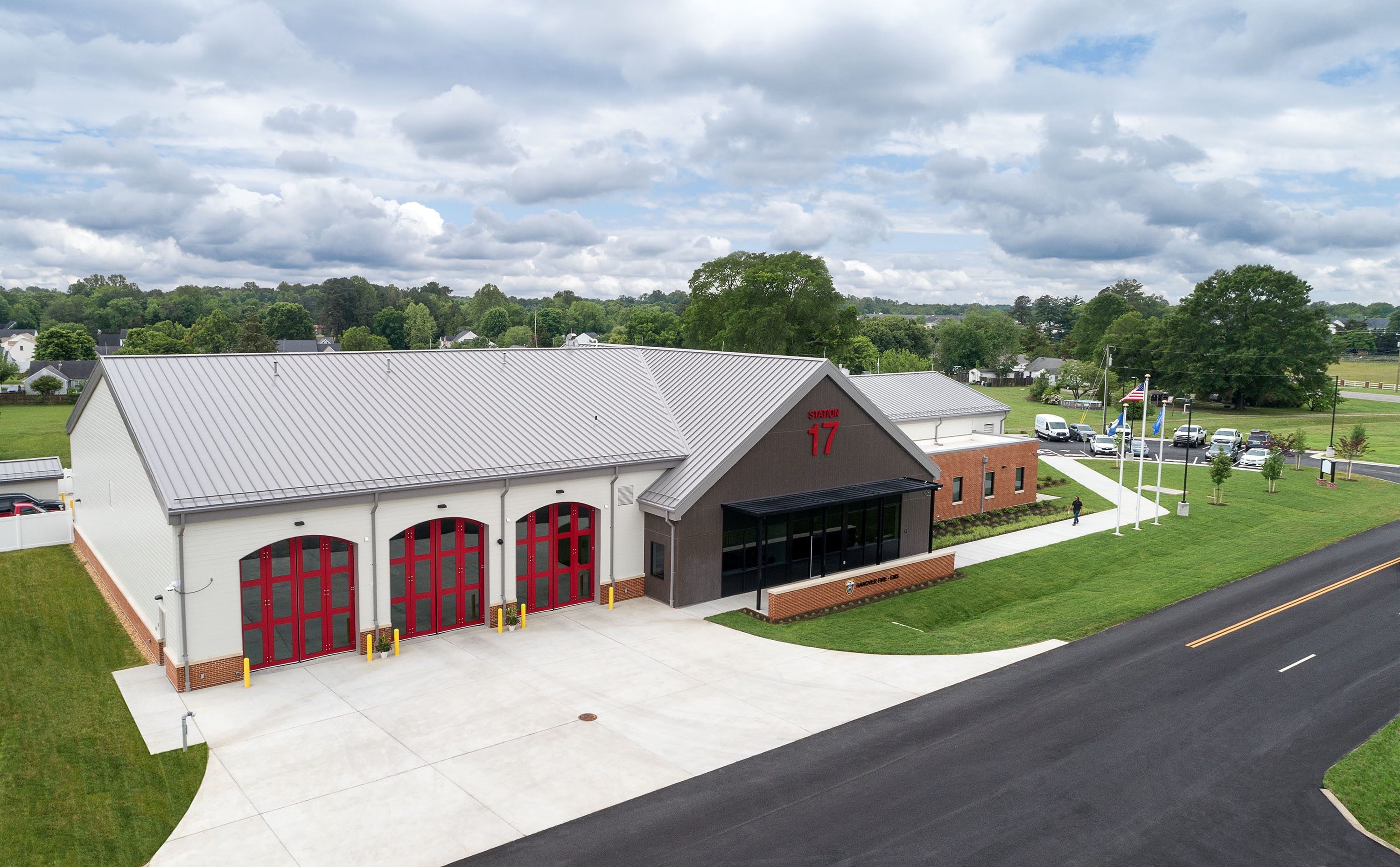
Station 17 is Hanover County’s first new fire station construction since 1987, addressing service gaps identified through call volume analysis and response time mapping. The 15,000-square-foot facility houses an engine, tower truck, and ambulance while providing individual dormitories and a specialized training feature: a hole in the mezzanine floor where firefighters can practice confined space rescue techniques by lowering themselves into the locker room below.
Proven Implementation Strategy
Hanover County has already begun construction on a second station using the same prototype design, with plans to replace three additional aging facilities as part of a broader infrastructure modernization program. The standardized approach allows the fire department to maintain consistent training environments while reducing design timelines for future projects. The prototype’s success has generated interest from other fire departments seeking similar solutions.
Learn More
Chris Roman and Chief Matt Stainback will present detailed insights on prototype fire station design at the F.I.E.R.O. conference on September 21, 2025, at 9 a.m. Their session will examine Station 17’s development process and provide practical guidance for fire departments and design professionals considering this approach to emergency services infrastructure planning.


.webp)






























.avif)