The U.S. Green Building Council (USGBC) named Durham County Youth Home a recipient of a 2026 U.S. Local Leadership Award for Project Excellence in the Carolinas market. The facility is among a small number of secure buildings in the country to earn LEED Platinum certification, demonstrating that high-performance sustainable design and the security demands of a juvenile facility can coexist.
When Durham County decided to replace an aging youth detention facility, the county established a goal that most secure facility owners do not: achieve LEED Gold certification. The project not only met that goal, it surpassed it. Durham County Youth Home earned LEED v4 Platinum certification in March 2025, the highest level available and the first awarded to any project in Durham County.
The U.S. Local Leadership Awards “celebrate people, organizations and projects that exemplify excellence in advancing sustainable, healthy, and resilient communities through better buildings. These prestigious awards recognize transformative local impact that sets a new standard across key imperatives, including decarbonization, biodiversity, resilience, health, and equity,” according to USGBC.
"This project represents a powerful shift in how we think about and design juvenile justice environments—prioritizing healing, dignity, and opportunity. Achieving LEED Platinum while embedding trauma-informed design principles shows that we can create spaces that are both environmentally responsible and deeply supportive of youth rehabilitation. I hope this project can serve as inspiration for future juvenile detention and correction facilities to build on these successes." <p class="testimonial-name">Bryna Dunn, Director of Sustainability</p>
About the Facility
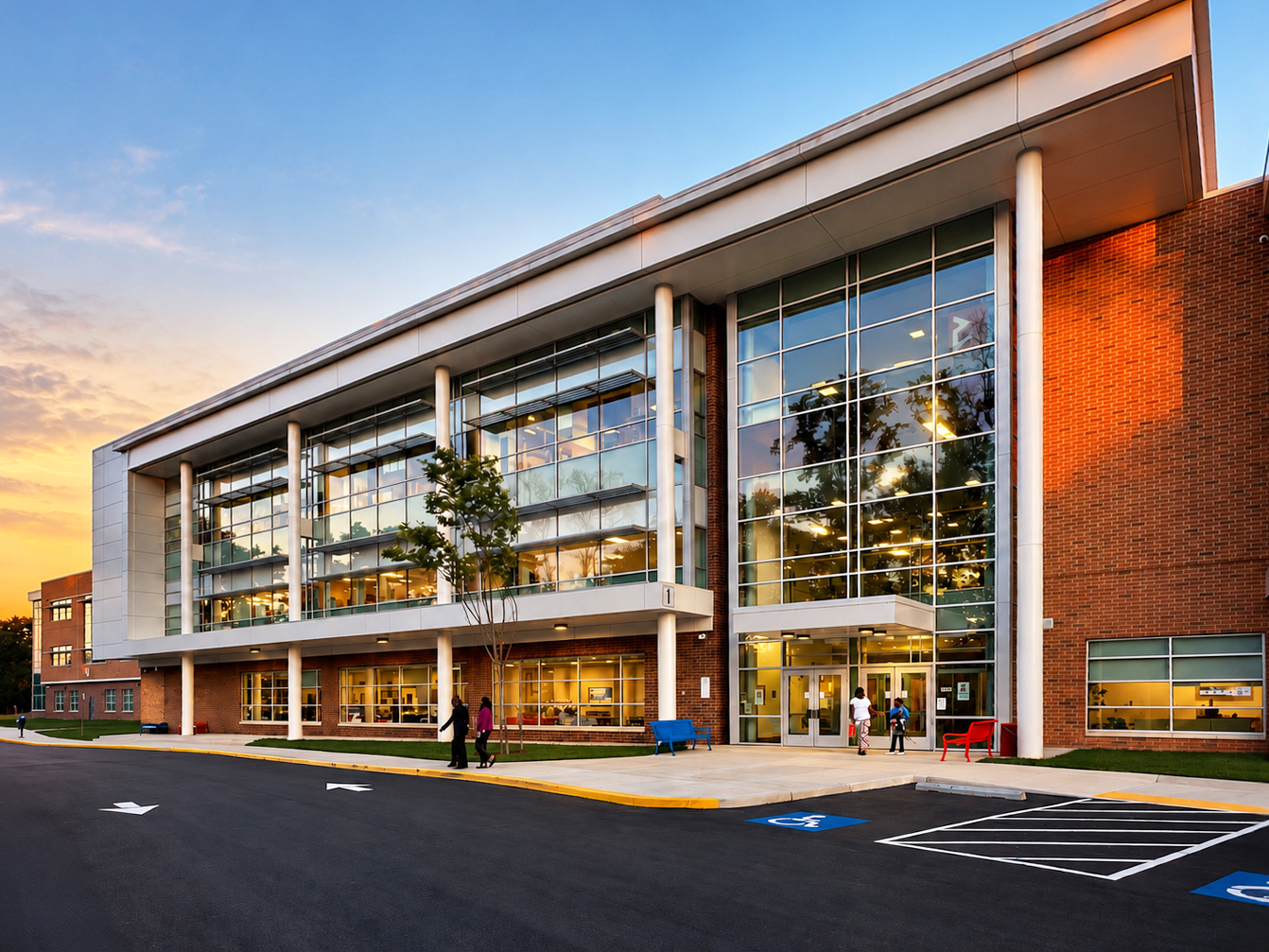
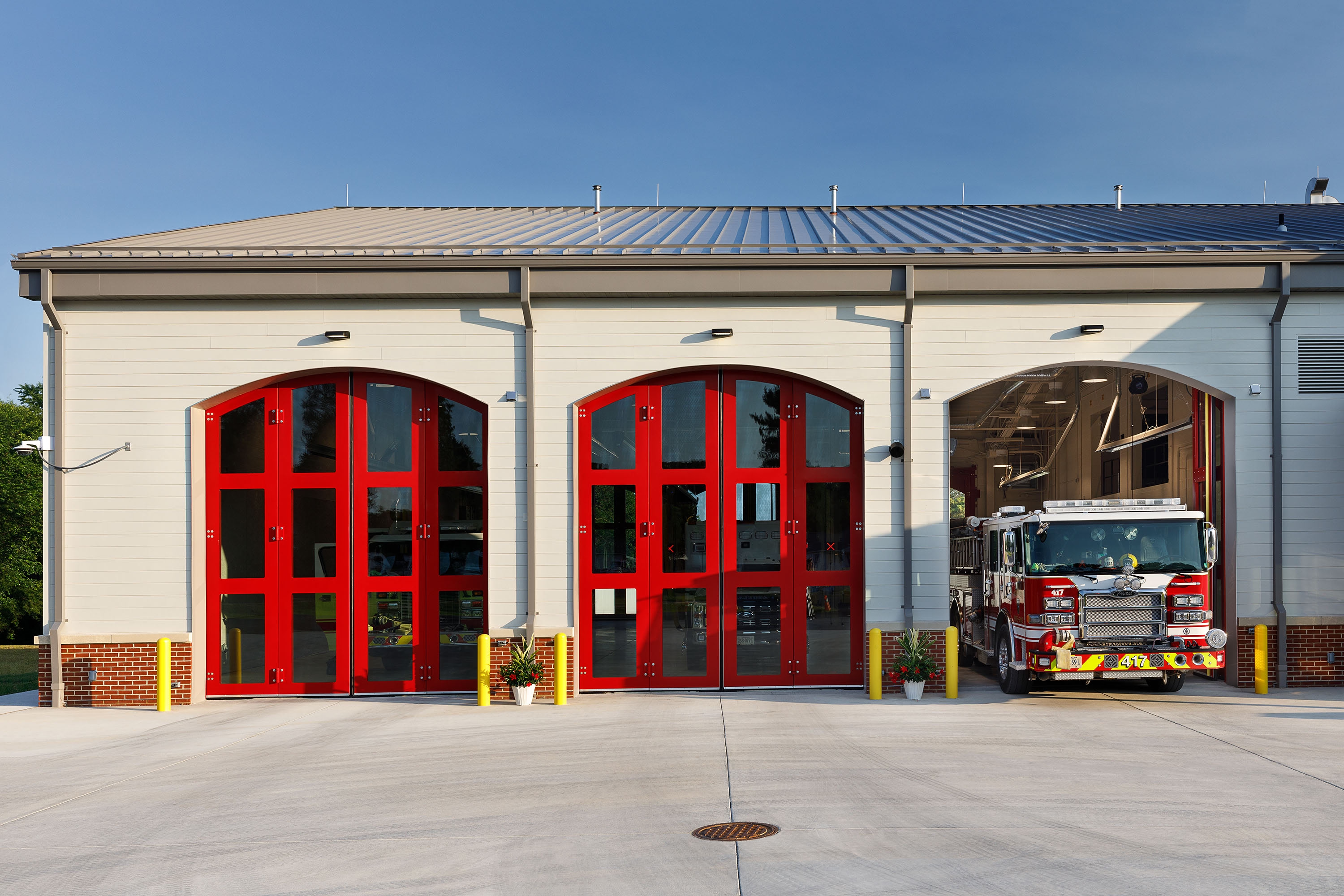
Durham County Youth Home is a 41,055-square-foot facility serving youth in the justice system through detention, assessment and direct support services. Rather than placing the facility on the outskirts of Durham or behind barriers, the county chose a visible, accessible location and oriented the building toward the street. The design complements the surrounding neighborhood. An on-site assessment center allows social workers and other professionals to evaluate youth before detention decisions are made; not all youth who enter the building are detained. The facility also provides medical care the former building could not accommodate.
Energy and Water
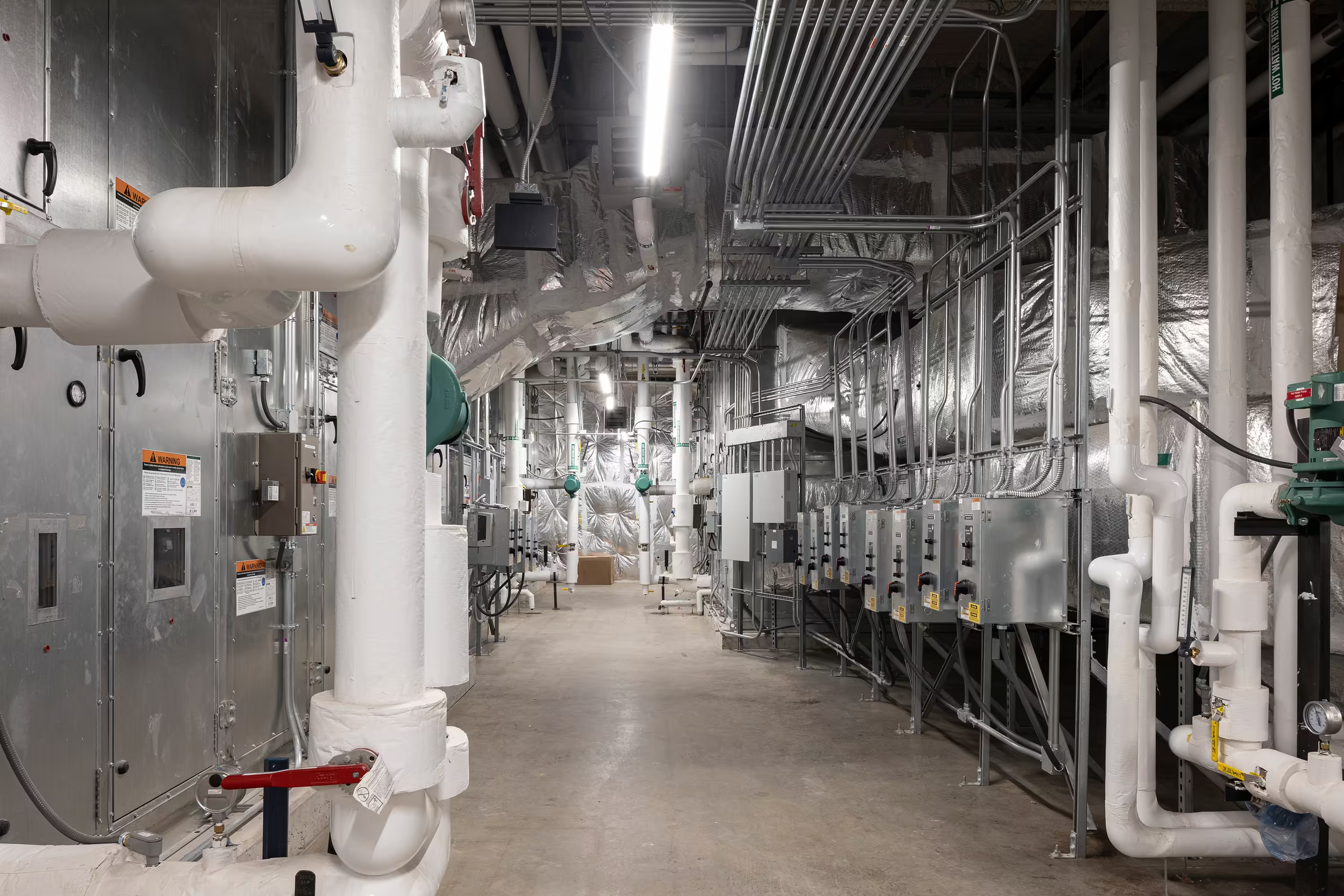
A geothermal heat pump exchanges heat with the earth to provide heating and cooling, instead of burning fossil fuels, and a rooftop solar array generates electricity on site. Together, the two systems cut energy consumption by 46 percent compared to a code-standard building of the same type. Low-flow plumbing fixtures reduce water consumption by tens of thousands of gallons annually compared to standard fixtures.
Resilience
The design team built continuity of operations into the facility. An on-site generator powers the entire building during grid outages, and the electrical system accommodates the future addition of battery storage that would allow the building to operate independently from the grid for extended periods.
Site and Landscape
Native and adaptive plant species cover nearly half of previously disturbed areas on the site, eliminating the need for a permanent irrigation system. Total open space remains 87 percent planted. Bio-retention areas filter stormwater on site, limiting the volume reaching surrounding public infrastructure.
Materials and Indoor Air Quality
Moseley evaluated the full environmental impact of material choices from extraction through end of life and used those findings to drive selection decisions. Low-emitting materials limit the airborne contaminants that residents and staff breathe daily. Products with recycled and bio-based content were prioritized, as were manufacturers with take-back programs. During construction, the team diverted 1,819 tons of waste from landfills.
Interior Environment
The design reduces the institutional character typical of secure facilities. Clerestory windows and views of nature bring daylight into the building, and residential finishes replace the hard surfaces common in correctional settings. Wall-to-wall soft flooring absorbs sound and lowers noise levels. A direct supervision model keeps staff physically present with youth in day rooms, and programming spaces accommodate diverse populations, including people with disabilities and non-English-speaking families.
Recognition
USGBC will present the award at the USGBC ADAPT: Denver Regional Conference, May 12-13, 2026. Moseley will receive additional recognition at the USGBC Carolinas Transformation Forum this November.


.webp)























.avif)