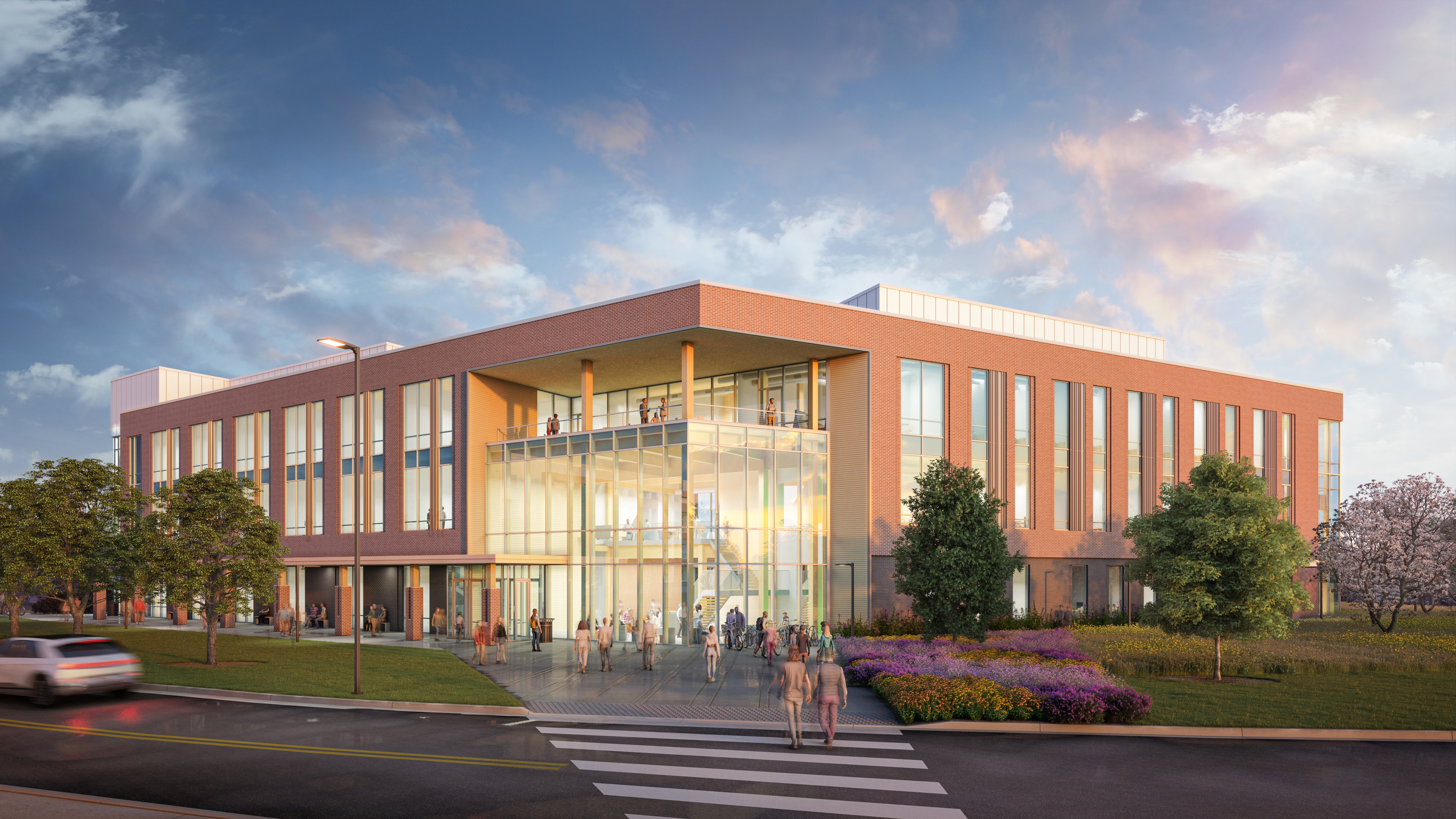
When partnering with a client on a new design project, it isn’t always obvious whether renovation or new construction would be the best option. When facing this challenge, decisions should be informed by a thorough investigation and evaluation of needs. What key factors should teams consider? What aspects of each project type best suit the client’s goals? What are the benefits and potential setbacks of each approach? With our help, Clemson’s decision to build its first mass timber academic building was as methodical and as data-driven as the sciences the facility will house.
Cost and Functionality
One common misconception is that renovation is the cheaper option. While this can be true, it is not always the case, especially when renovating an aging facility that lacks the modern layout, amenities, and structural integrity required to satisfy its intended purpose. Renovating under such circumstances may cost the client more, either immediately or ultimately, depending on how extensive the work. In these situations, it makes sense to weigh other options and possibly consider a new design altogether.
A valuable first step is considering a building’s function and how well the current structure can support it. Clemson’s existing FEC Building accommodated lab-focused spaces, but modern FEC programs include extensive research in the field with more analytical and data-rich study occurring within the building. Lab samples also require less processing in the building due either to a shift in research or the use of off-site processing services.
This meant that the FEC department’s needs developed from a lab-intensive building to what more or less resembled a classroom and office building with a few labs. Retired Clemson project manager, Paul Borick, worked with our design team throughout the decision-making process. According to Paul, “Forestry has changed. The new building needed to meet modern needs. The original design made this difficult.” Equipped with this understanding, our team analyzed whether the facility could house those features in a cost-effective way solely through renovation.
To satisfy end users in a way that made the most sense from a budget perspective, our team worked with the client to analyze several design approaches and their associated costs and eventually presented these findings to Clemson’s Executive Leadership Team. Together, the team considered budget-related components, such as the building’s longevity and future renovations or repairs that may be required in the original structure. We ultimately determined that new construction was the most reasonable approach. Suzanne McDade, Moseley’s managing principal for the project, expressed that project stakeholders opted for “a new building that will last another 50-plus years.”
Sometimes, however, budgets can and must shift amidst changing circumstances. Adapting to these changes must be a priority in order to satisfy project goals and maintain momentum. For this project, prices were determined prior to the pandemic in 2020 and the significant inflation that followed. The subsequent financial concerns in the higher education sector resulted in the FEC project being put on hold for two years. Moseley, therefore, worked with Clemson’s senior leadership on a revised budget approved by the state, which ultimately allowed the project to move forward with no program reductions.
Sustainability and Energy Performance
Considering costs includes considering a building’s energy performance. If it exhibits poor performance in this area, it could cause high costs for the client. Therefore, teams must also consider energy efficiency when working with an existing building. The Clemson FEC Building’s original construction predated any serious consideration of energy performance and how building envelopes impact it, thus potentially causing indoor environmental issues.
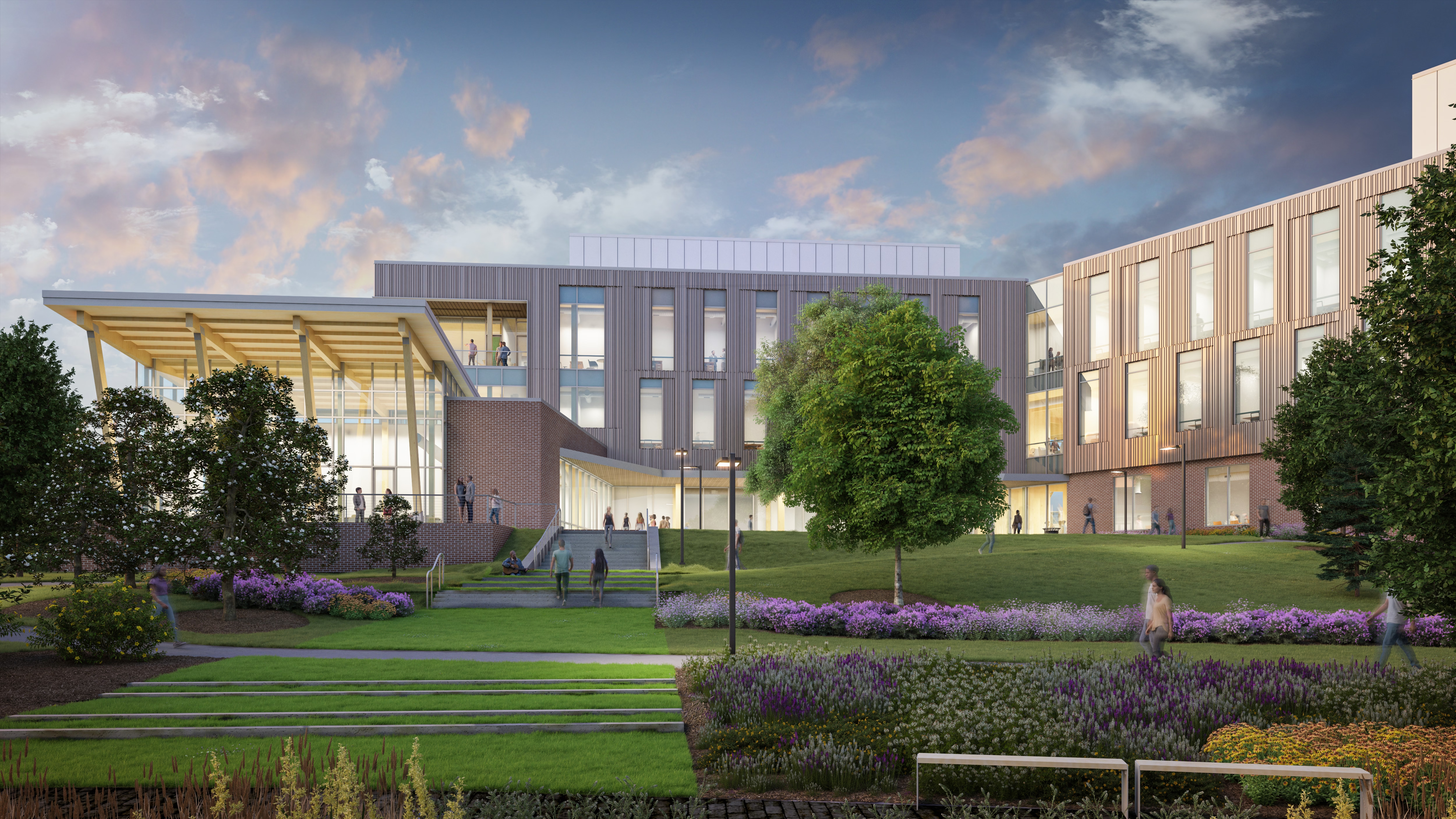
Older buildings may not include an abundance of sustainable features in general. This includes things like ample daylighting, resulting in lower energy costs and increased occupant satisfaction. When our team considered the students, faculty, and staff who would use the FEC Building, it was important to incorporate such features in a new facility. This was a priority not only to save the client money in the long run but also to support our goal of creating a learning environment that fosters sustainability, student success, and overall comfort.
Avoiding Disruption
Thinking about what ultimately suits end users is vital and should guide design teams toward a satisfactory final product. Equally important, however, are end users’ needs throughout the rest of the design and construction process. When deciding between renovation and a new building, particularly when dealing with educational environments, it’s important to think about what would be best for students, faculty, and staff in the time between concept and completion. Renovations that overlap with the academic year inevitably require temporary displacement and possibly prolonged interference with the academic process. Even more, using swing spaces for this purpose is an added cost to the client.
Therefore, with Clemson’s FEC Building, a rebuild on a new site not only addressed budget concerns but also minimized disruption to the learning environment, further supporting our team’s goal to support a positive experience for students and educators. Once all former Lehotsky students, educators, and services have been fully relocated to the new forestry building, Clemson will then be able to use the vacated building as swing space for other campus occupants during future renovations.
Learning From Others
Finally, an architect’s role is not necessarily to invent new concepts altogether, nor is it to imitate the work of other firms. Rather, it is to propose fresh solutions to specific challenges, many of which may have been faced by others in the past. Precedent is therefore a valuable learning tool, as comparable work conquering similar challenges can help inspire design solutions. Offering a unique interpretation of these design precedents can help teams create a satisfactory final product and make well-informed decisions.
When our design team took on the FEC Building project, we sought to learn from different sources. In-person and virtual facility tours on several campuses proved beneficial, including a tour of Auburn University’s forestry building. This facility was a great example of how the forestry program type has changed since the original Lehotsky’s construction, and how modern facilities can support its developing needs. Ultimately, this helped guide our team and further justified our inclination to build new.
Forestry on Display
Pursuing new construction also gives Clemson the opportunity to showcase the industry supported by this new building. They partly achieved this by using mass timber wood, a material comprising prefabricated wood panels that support safer, long-lasting, environmentally responsible structures. Mass timber wood will be on full display throughout the interior, establishing a building that is not only significant to students, faculty, recruits, and potential donors, but is a teaching tool showcasing an alternative construction method. The hope is that this will inspire long-term, positive effects on the local forest industry.
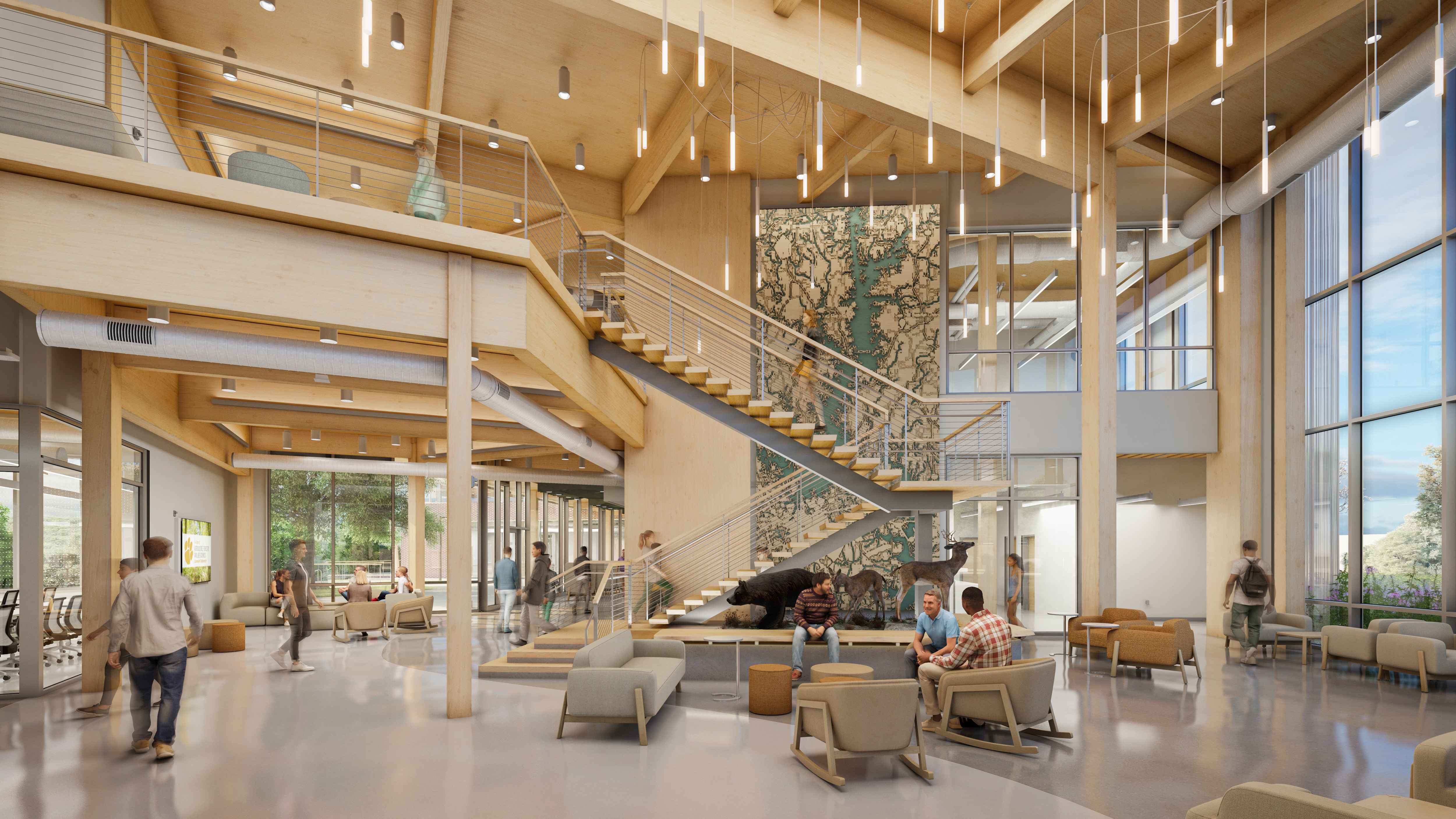
Above all, design teams should strive to make practical decisions that support the creation of facilities that will serve the client for years to come. This may involve carefully analyzing a project through space needs studies, facility conditions assessments, and feasibility studies to identify what’s really needed, whether it can be achieved in an existing building, and whether a project should proceed as planned or be modified. They can also be invaluable tools to leverage in securing funds for the project, as they demonstrate the validity of the initiative and the accuracy of the amount of funds being requested. Additionally, documentation and renderings are particularly helpful for garnering support from the community and from donors. The guiding principle through all of this is to prioritize each client, working alongside them in pursuit of sustainable, cost-effective, and modernized solutions.


.webp)

























.avif)