The U.S. population aged 65 and older is projected to nearly double by 2060, according to the U.S. Census Bureau. Research from AARP shows that a growing share of older adults prefer to remain in or relocate to urban centers, citing walkability, access to services, and proximity to family. In many of those same markets, commercial office vacancy rates remain well above pre-pandemic levels, creating underutilized sites that carry existing entitlements, infrastructure, and, in some cases, below-grade parking already in place.
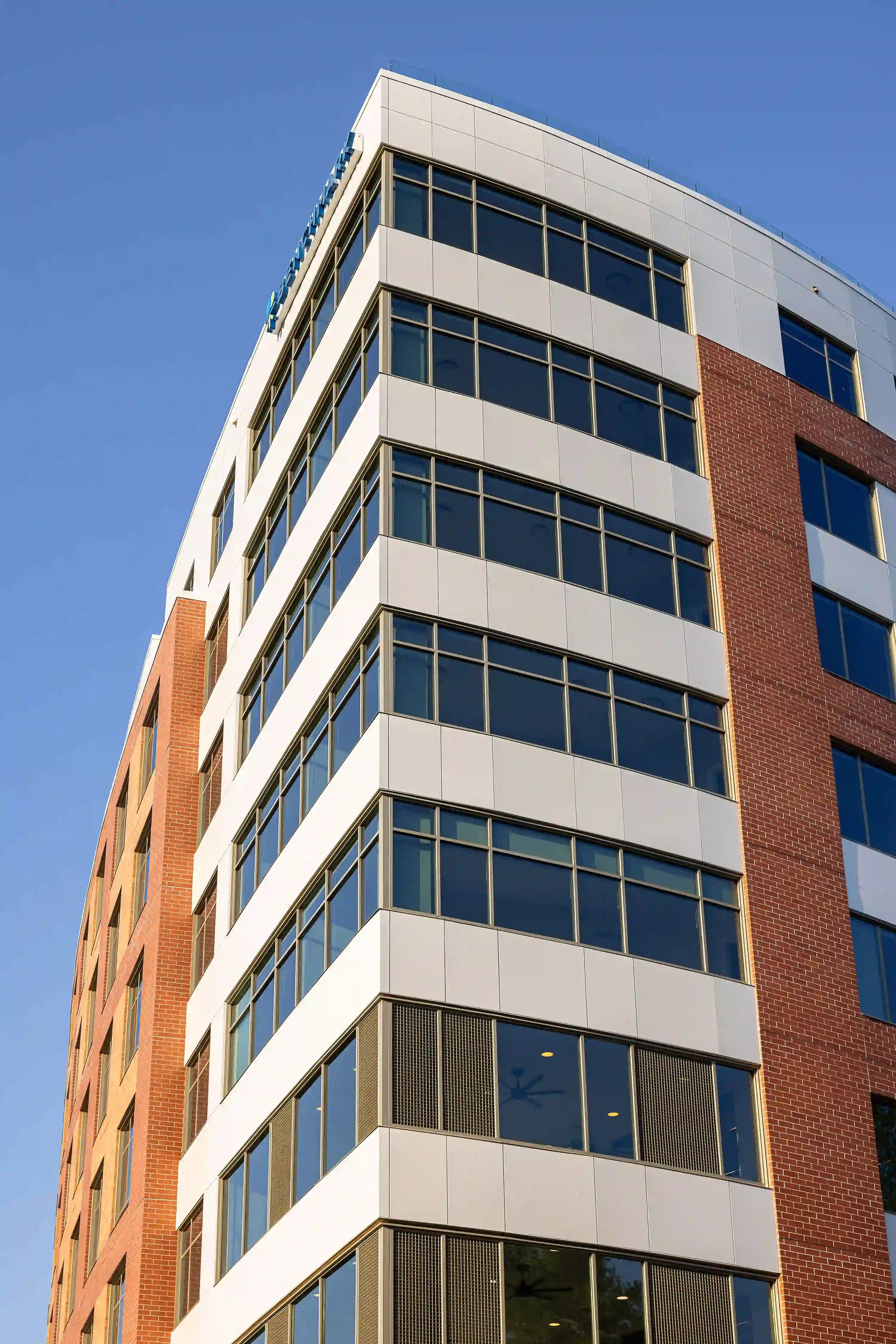
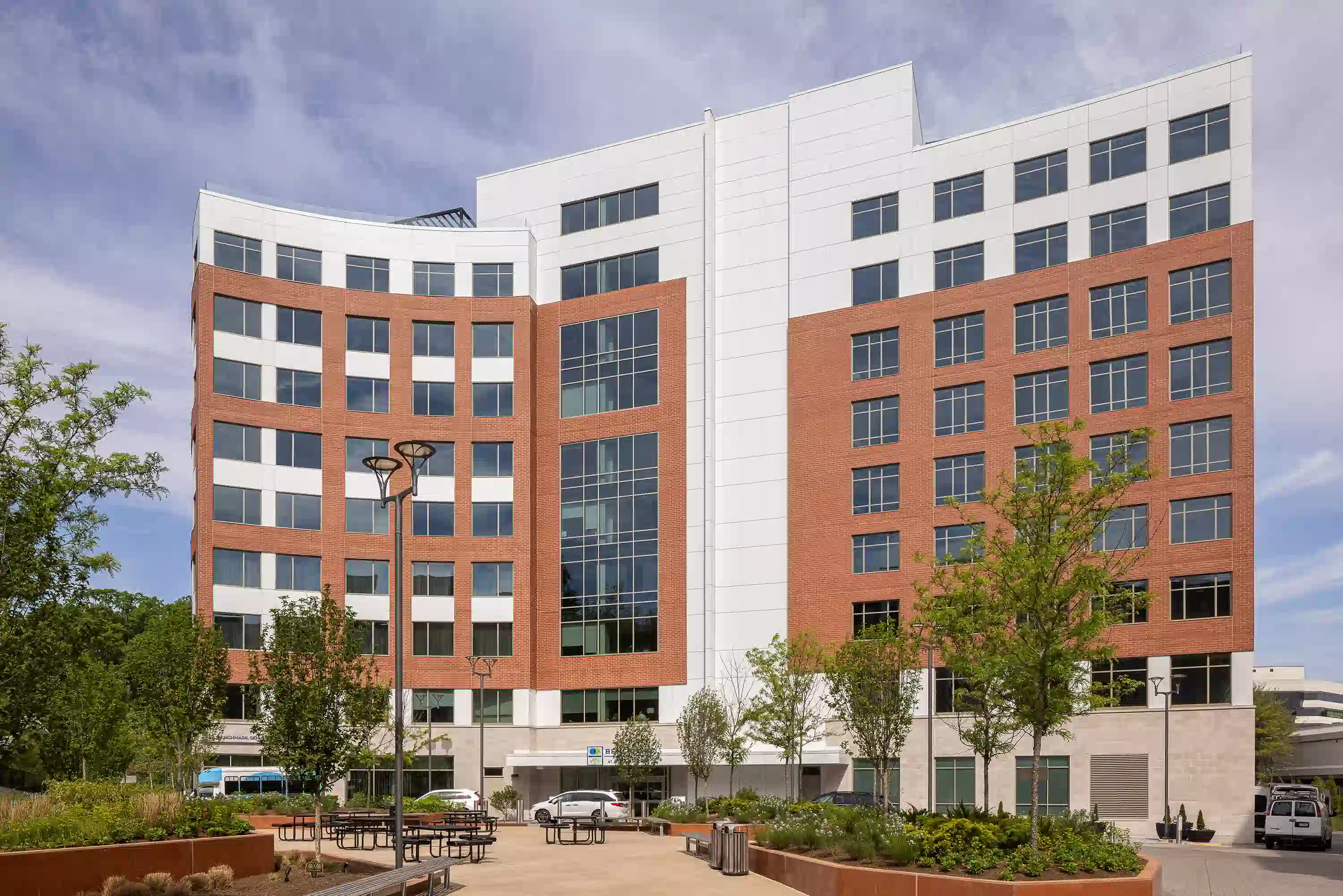
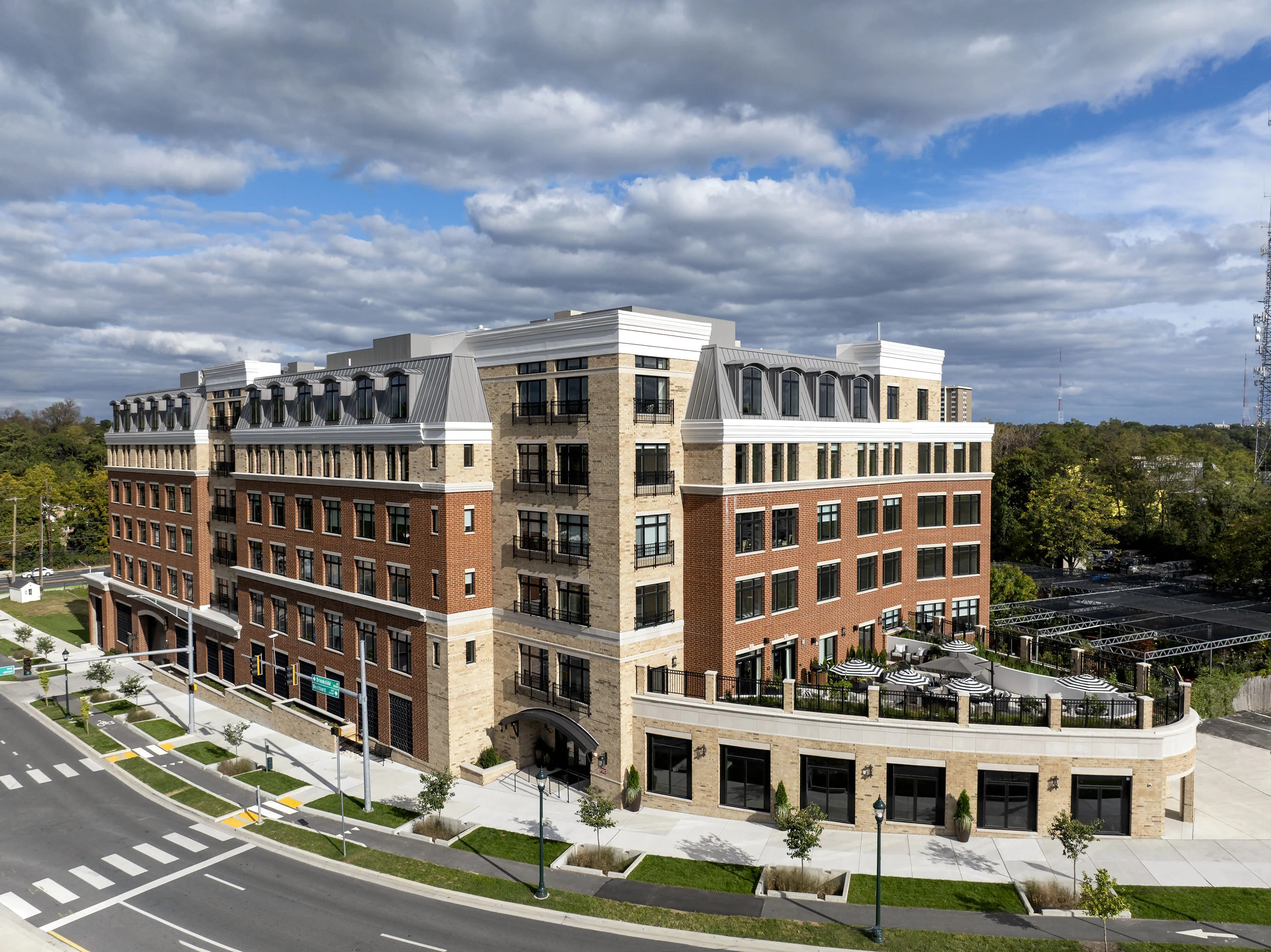
Benchmark at Alexandria, a 10-story assisted living and memory care building in Alexandria, Virginia, was developed on one of those sites. Designed by Moseley and co-developed by ORR Partners and Benchmark Senior Living, the 115-unit building is the final piece of West Alex, a mixed-use development that includes market-rate and affordable apartments, ground-floor retail anchored by a grocery store, and 820 below-grade shared parking spaces. The project received the NAIOP Best Senior Living Community award and marks Benchmark Senior Living's first urban high-rise development.
A Site, a Shift, and a New Program
West Alex began as a concept for a high-density, mixed-use destination on a formerly underutilized site in Alexandria. The first phase, completed in 2019, delivered 278 market-rate apartments, 79 affordable housing units, and approximately 110,000 square feet of ground-floor retail. The third building was planned as an office tower. No tenants materialized, and the pad sat unused. ORR Partners and Benchmark Senior Living identified an opportunity, and through a rezoning and site plan amendment, the project team secured approval for a 10-story senior living building, gaining three additional floors above what had previously been approved.
The footprint, structure, and below-grade parking were already in place. The building's curvilinear geometry was a fixed element, and horizontal expansion was not an option. Moseley's design team, led by Dora Kay, AIA, had approximately 12,000 square feet per floor to program.
The foundations required footing enlargements and column jacketing. A transfer slab with beams reaching 36 inches deep was added, all completed while the parking garage below remained operational and continued serving the apartments, retail, and grocery tenants above. The garage also required a separate general contractor: one firm handled structural improvements below grade while another built above. Kerem Demirci, vice president of ORR Partners, put it plainly: "You drive through this garage. We just spent millions of dollars here. No one knows about it."
Designing Vertically for Daily Life
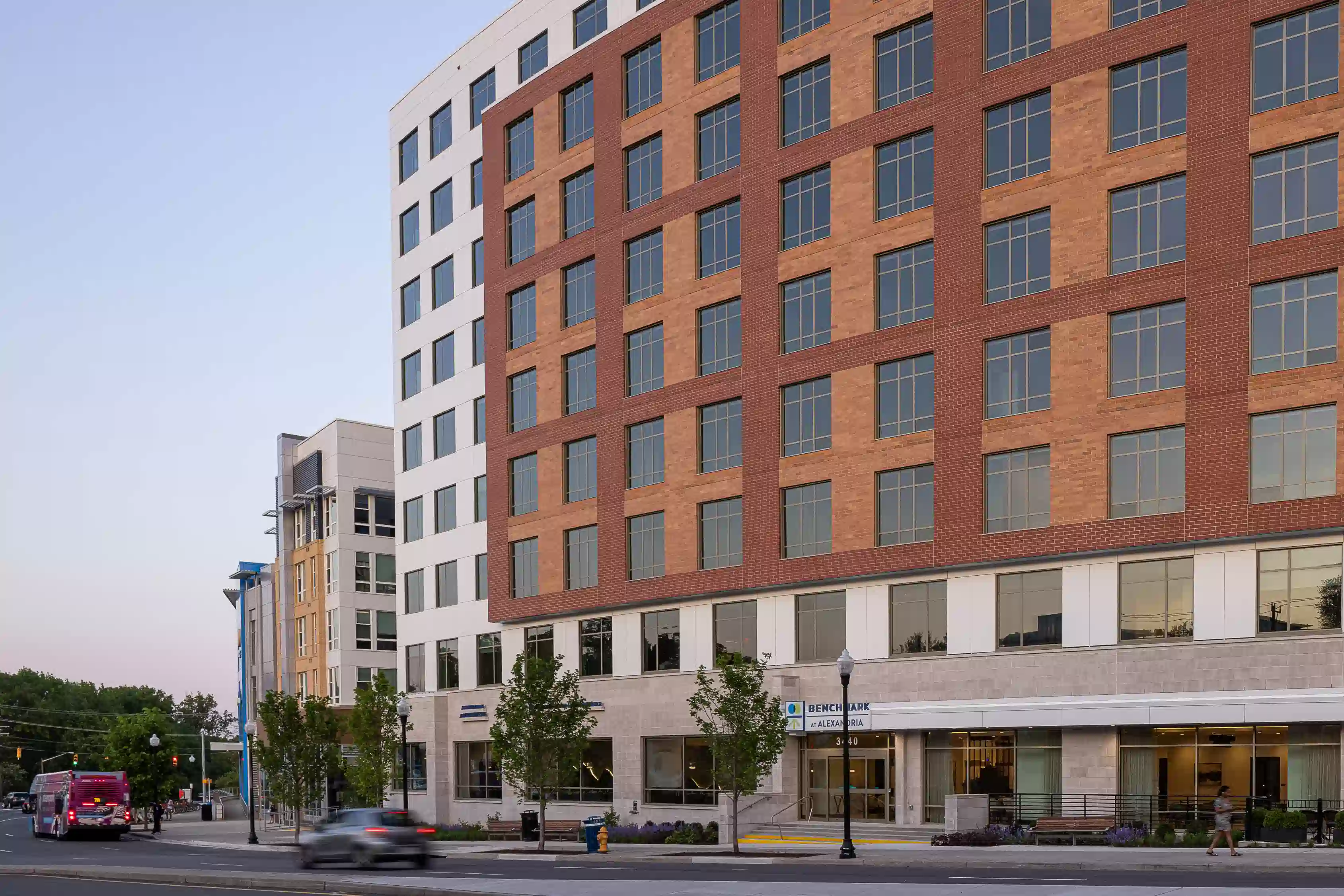
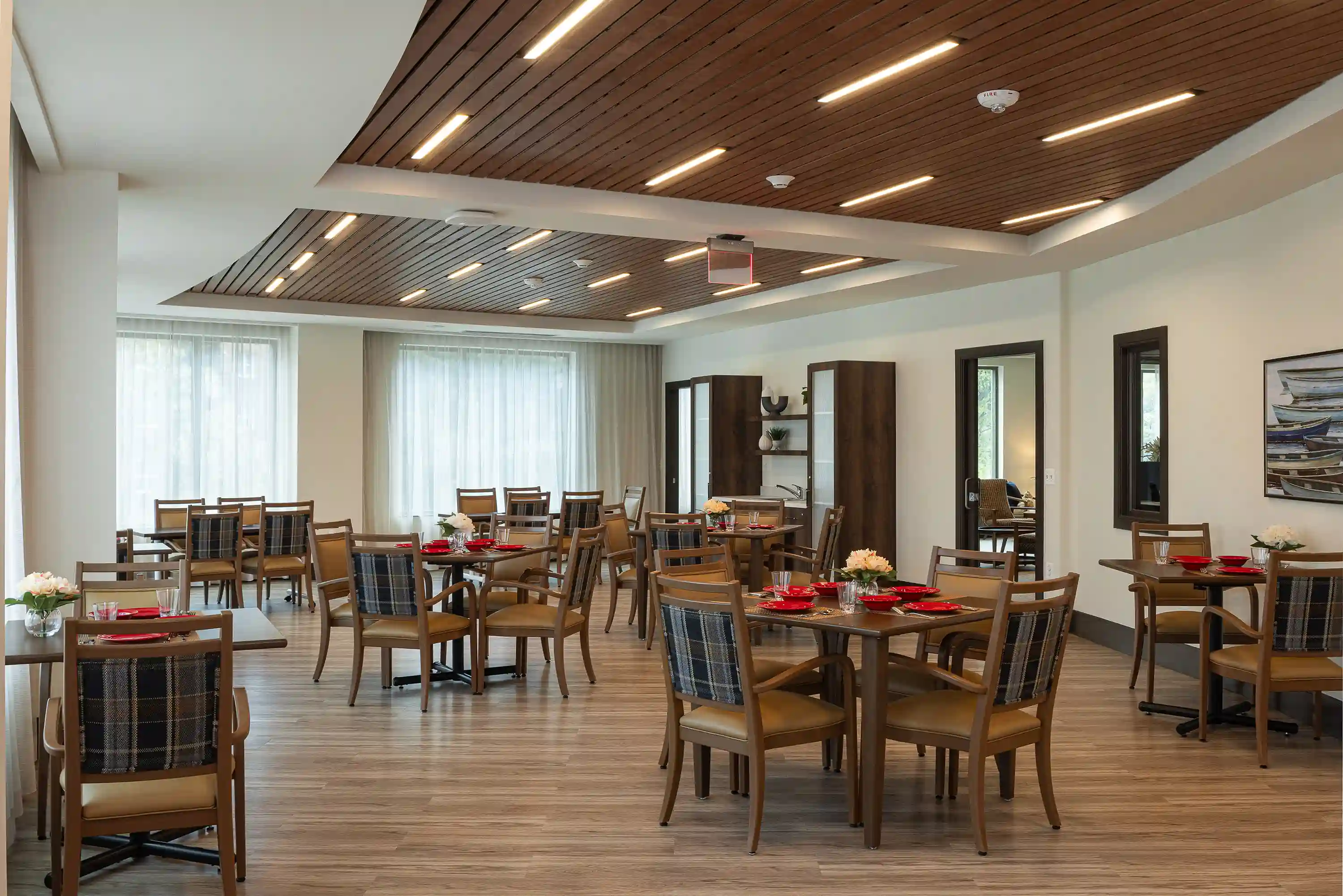
The design team concentrated the primary amenity program on the first floor. At street level, the exterior presents storefront glazing and signage bays consistent with the surrounding development, and zoning approvals. Inside, the full floor encompasses dining, a bar and bistro, a demonstration kitchen, and the building's main entry sequence. The 16-foot floor-to-ceiling height, an artifact of the original office building design, produced an expansive, hospitality-grade environment.
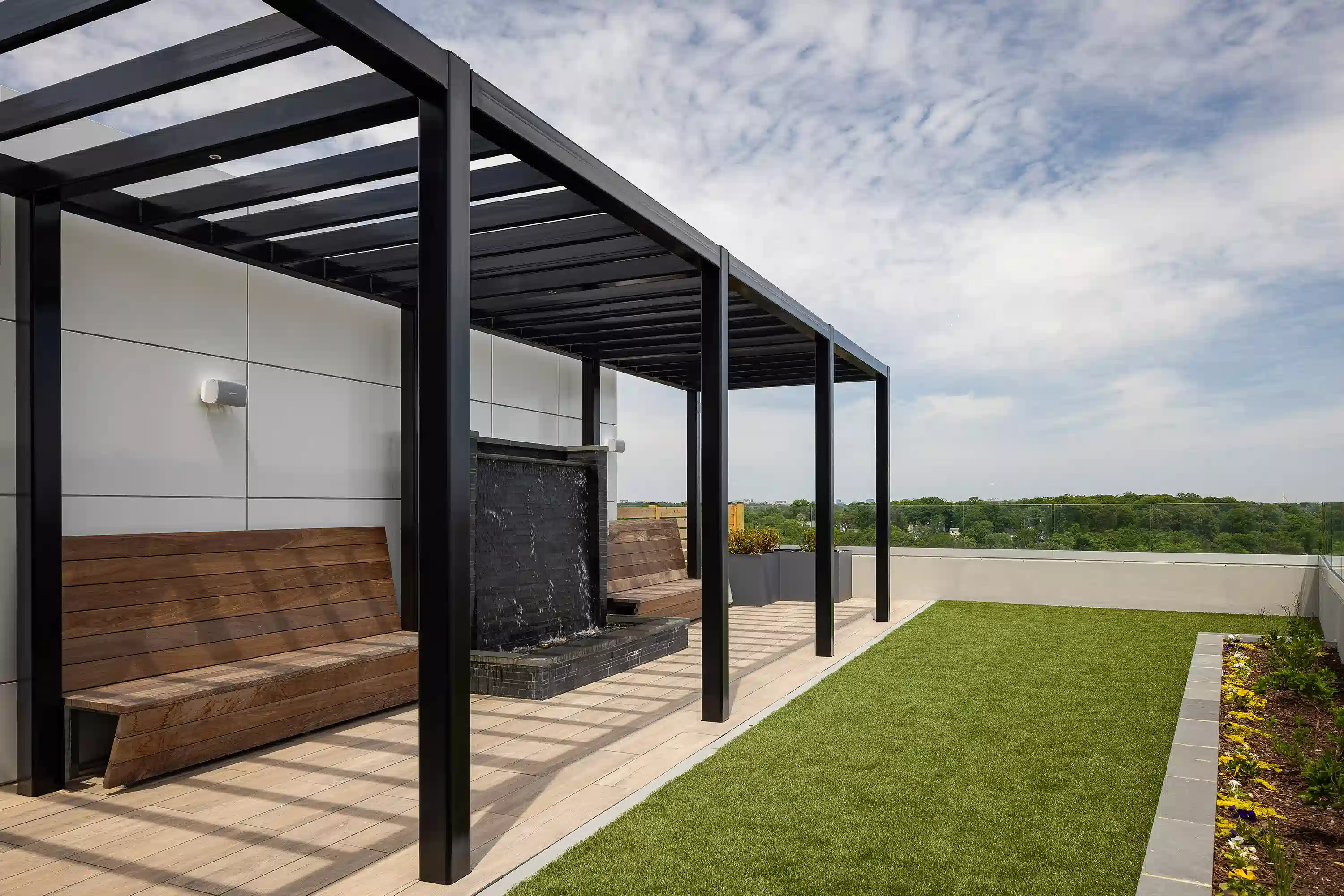
Memory care occupies both the third and fourth floors, each with a secured outdoor terrace so residents can access open air without leaving their floor. Assisted living residences are located on the second, sixth, seventh, eighth, and ninth floors. The tenth floor holds an indoor amenity gathering space and rooftop terrace with a garden and views of Washington, D.C., landmarks.
The curved office building layout with elevator and stair locations already set by the existing garage below presented a code challenge inherited from the original office use. The stair configuration left egress travel distances that exceeded the required for I-2 institutional occupancy limitations. The design team extended the stair corridors to bring travel distances within the allowable range. The curved corridor created to reflect the exterior design also served a functional purpose: natural light is able to reach the middle of each residential floor through corridor terminations oriented toward exterior windows. Moseley developed 16 distinct unit types to work within the curvilinear floor plate, with corner units at the upper floors becoming premium offerings.
Wellness Built In
The Alzheimer's Association has documented the relationship between light exposure and behavioral symptoms in people with dementia, including sundowning, disrupted sleep, and increased agitation. Benchmark at Alexandria addressed this through a circadian lighting system on both memory care floors, shifting color temperature from cooler, higher-intensity light in the morning to warmer light in the afternoon and evening. The system reduces sundowning and creates more predictable conditions for care staff.
The building also incorporates a Babylon Micro-Farm hydroponic garden as both a resident activity and a food source for the building's commercial kitchen. The rooftop garden and secured outdoor terraces for memory care extends access to biophilia and open air to residents who might not otherwise reach them.
The urban location itself is part of the care model. Lee Castignetti, director of development at Benchmark Senior Living, elaborated: "Residents don't feel contained. They can walk out and grab their coffee in the morning if they want to." Residents can reach a grocery store, a diner, a salon, a dental office, and a central plaza without the need to use a car. Castignetti draws the connection that the resident’s daily access to walkable businesses to staffing outcomes as well: staff who observe residents living actively tend to find confirmation of their own commitment to the work. "When they see residents thriving and doing well," he said, "it just proves these people have a passion for what they do."
Sustainable Design From the Start
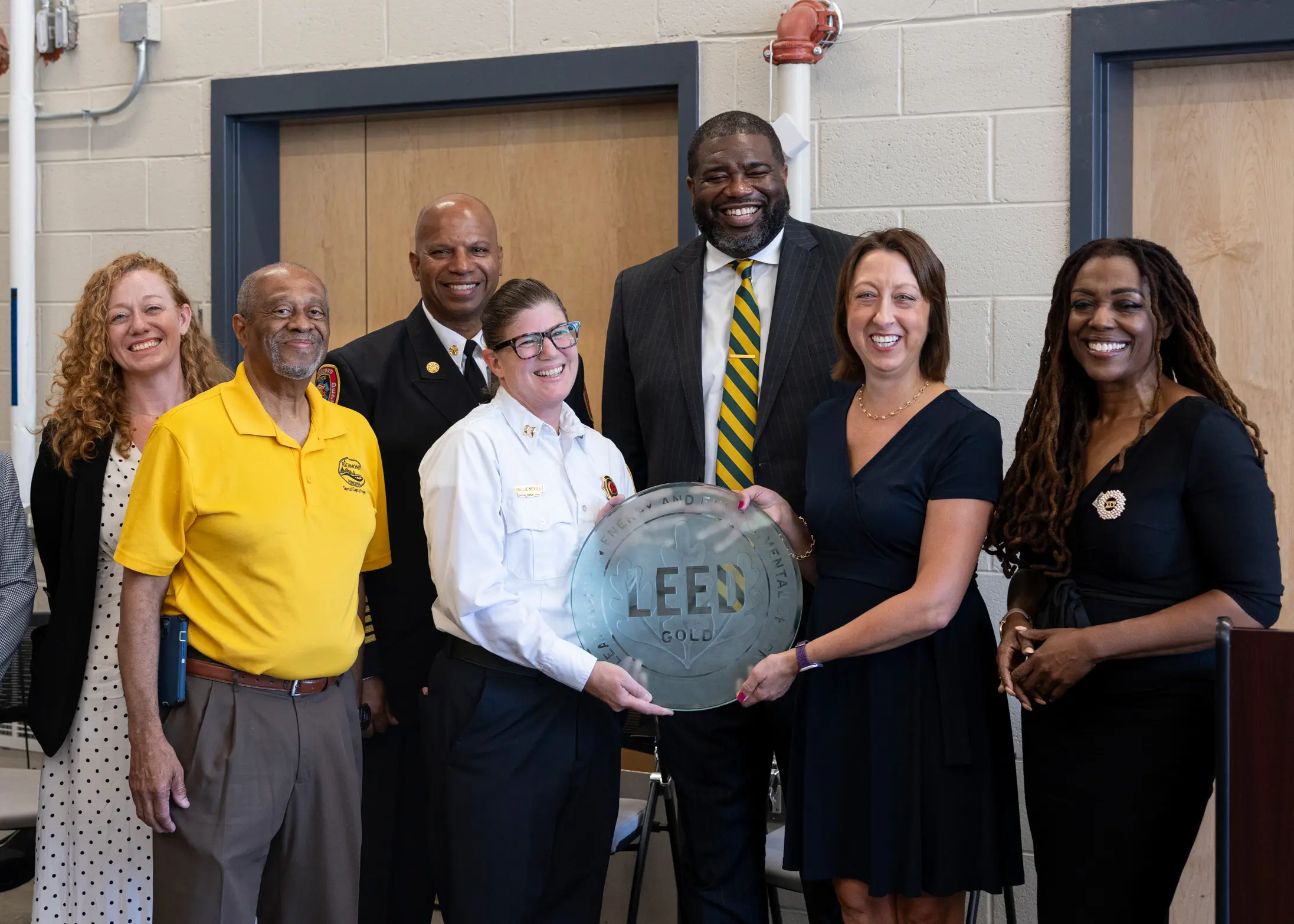
Benchmark at Alexandria achieved LEED Gold certification and the Energy Star designation. An integrative design approach engaged the full project team from the earliest design stages, allowing sustainability goals to be established before systems were sized and before those decisions became expensive to reverse. Having a general contractor involved during design allowed the team to price sustainability decisions in real time. The brownfield site and existing shared parking structure contributed credits a greenfield project could not have claimed.
By the Numbers
- 3,785,177 kBtu conserved annually
- 29 percent reduction in energy costs, exceeding $44,500 in annual savings
- 38 percent reduction in potable water use, conserving more than 916,000 gallons per year
- 20 percent of electrical load offset through Renewable Energy Certificates
- 97.5 percent of construction waste diverted from landfills (2,180 tons)
- Outdoor views available to more than 75 percent of regularly occupied spaces
Beyond Alexandria
No single partner held all of the expertise this project required. ORR Partners brought familiarity with the Alexandria regulatory environment. Benchmark Senior Living brought the operational knowledge to define the program and specify what the building would need to function well for residents and staff. Moseley brought the design and technical depth to execute that program within a fixed, curved footprint above an active parking structure, under I-2 occupancy standards, while pursuing LEED certification. Demirci makes the financial reality plain: "This day and age, it's really hard to get deals to pencil. It does take an incredible level of creativity, and that doesn't just come from the developers and the financial partners. It's a full team effort to be able to break ground on a job today."
Visitors and families notice what the building does not look like. Demirci makes the same assessment from outside: "It's senior living, but it doesn't necessarily look like senior living. It is truly integrated." Castignetti hears the same observation repeatedly: "A lot of the comments I get from people are that it feels more like a boutique hotel than it does senior living. When you walk into the building’s first floor, you see there's a lot of truth to that."


.webp)



























.avif)