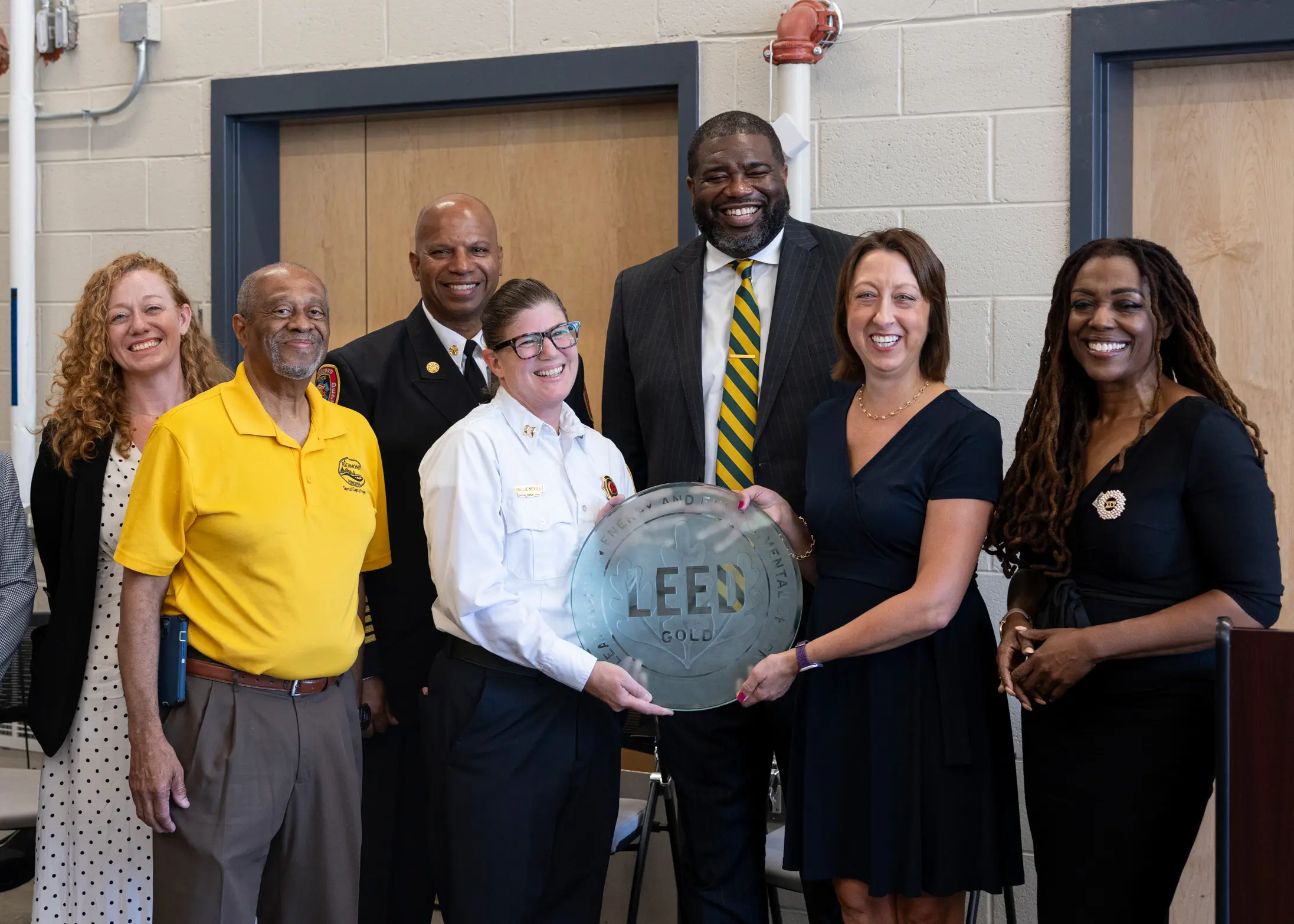
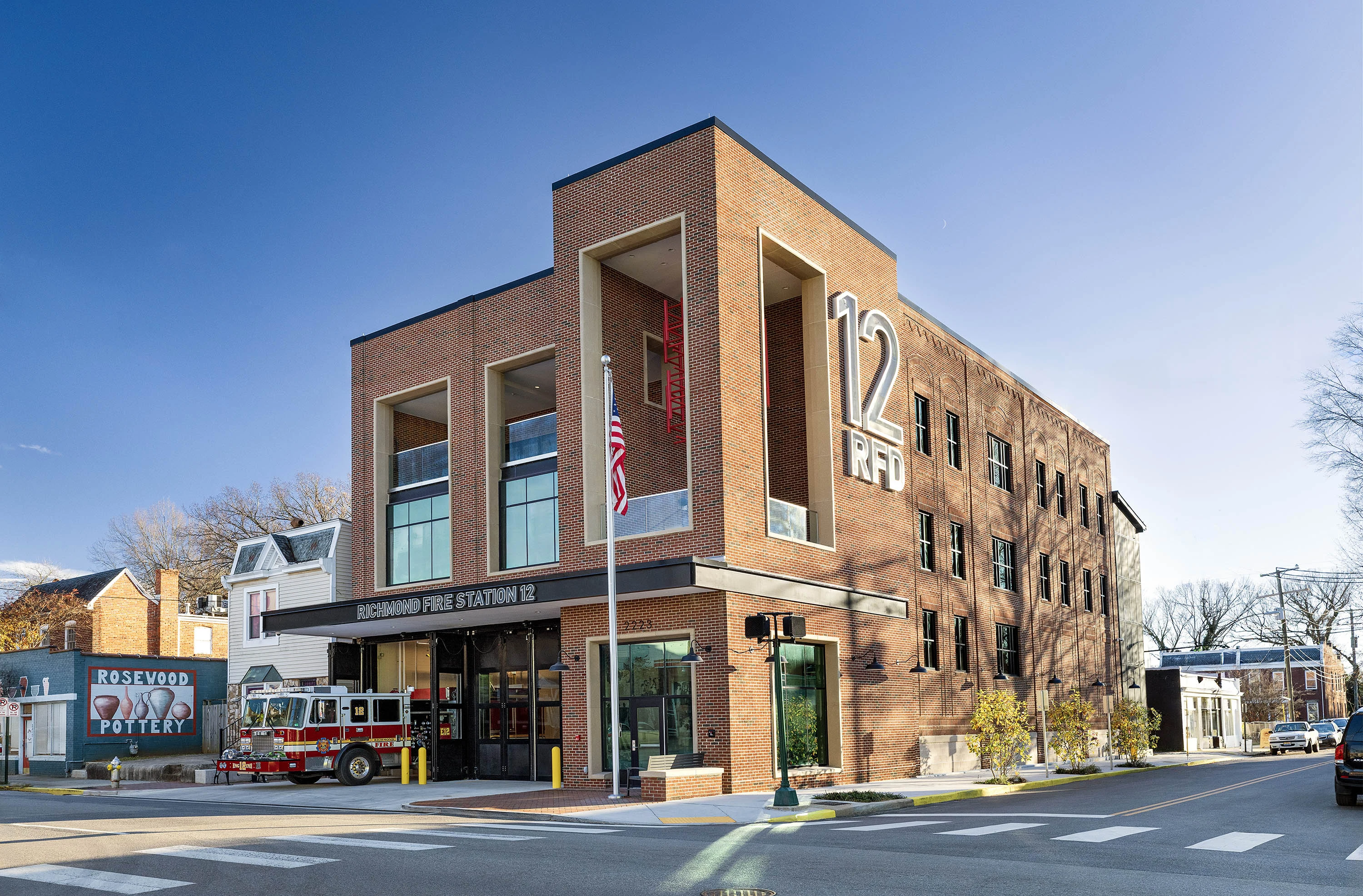
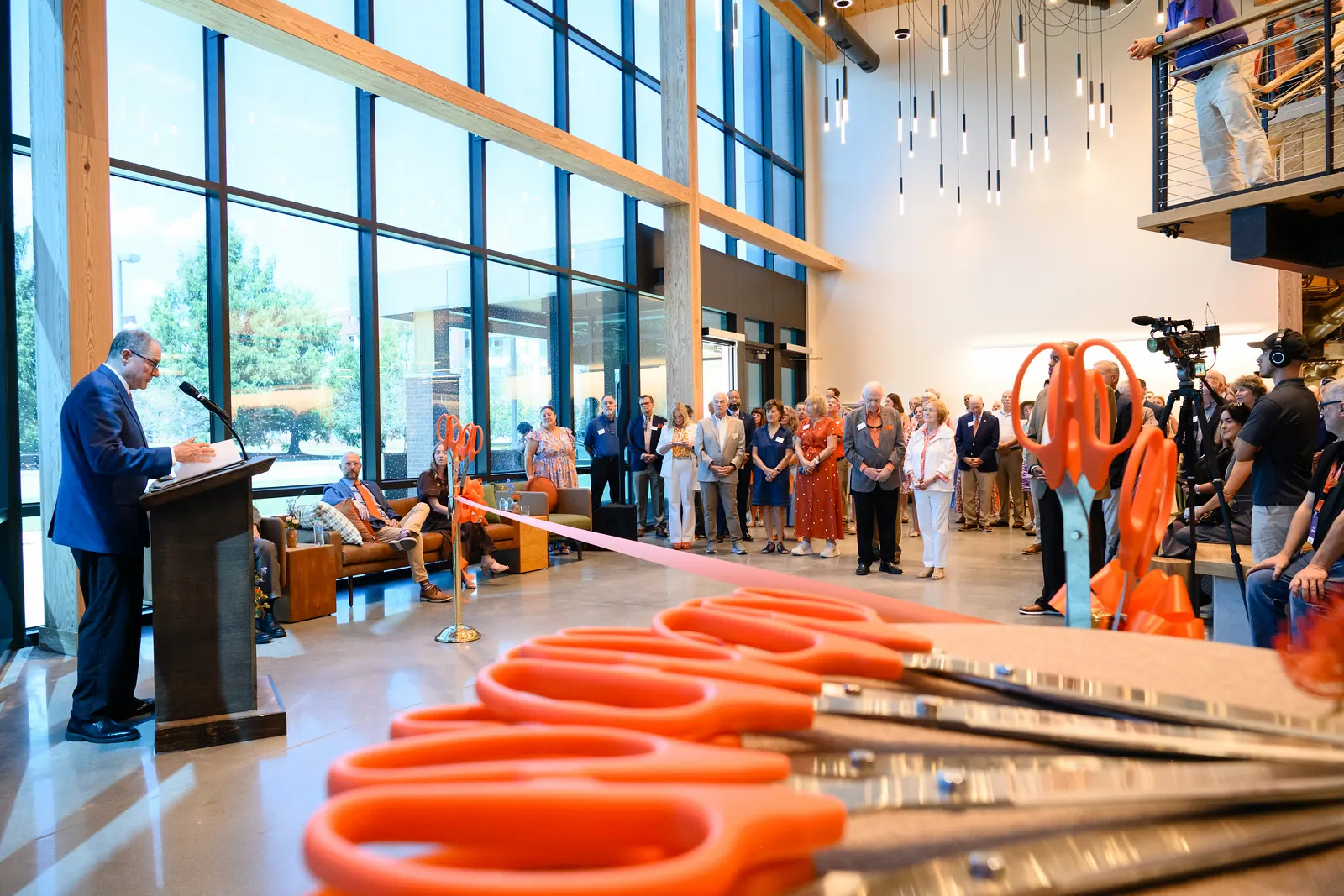
Richmond Fire Station 12, designed by Moseley, has earned Leadership in Energy and Environmental Design (LEED) Gold certification from the U.S. Green Building Council, marking the first time the City of Richmond has received the designation. The project was celebrated at a plaque ceremony held May 19. The project also earned the 2026 American Public Works Association Project of the Year Award.
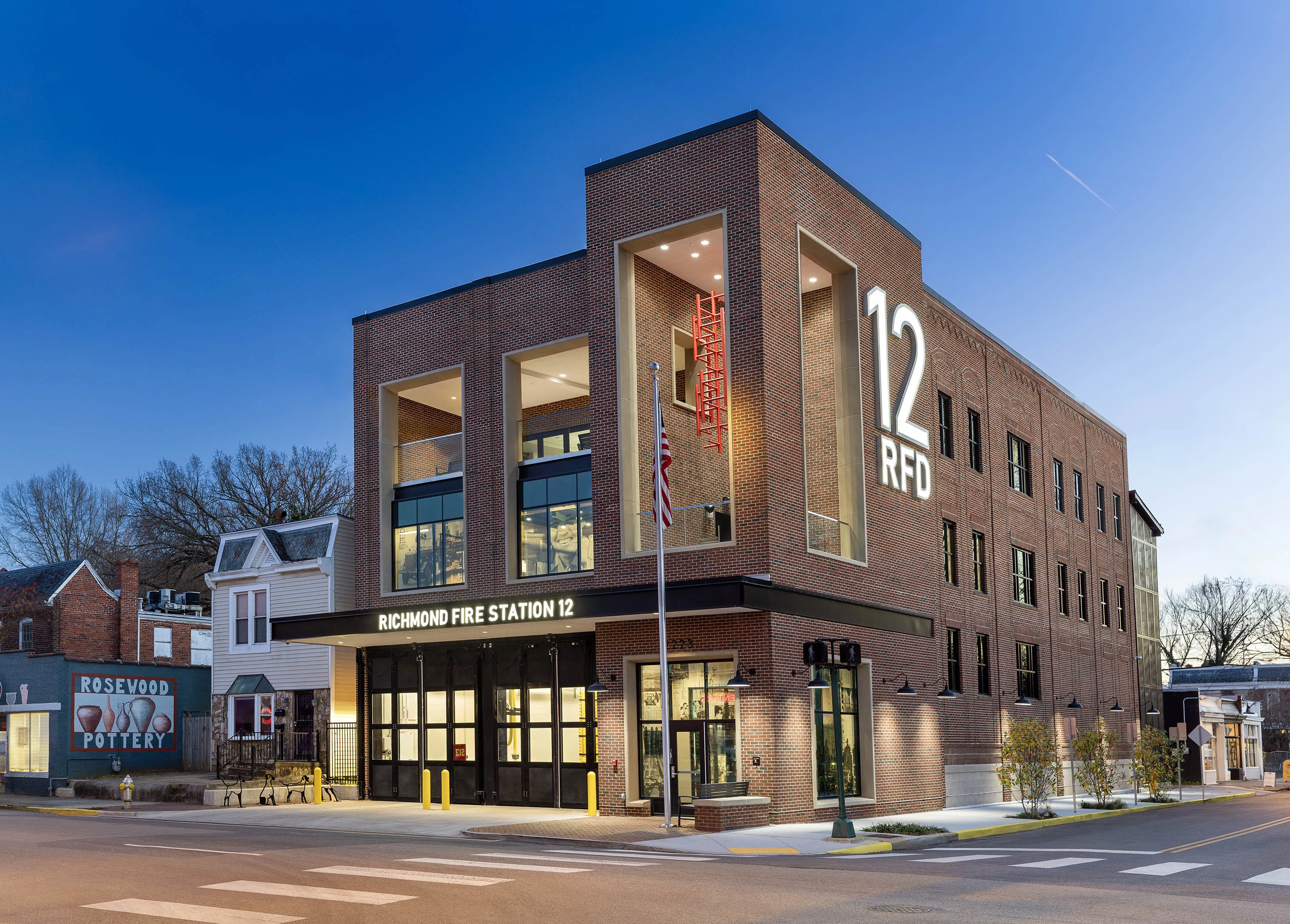
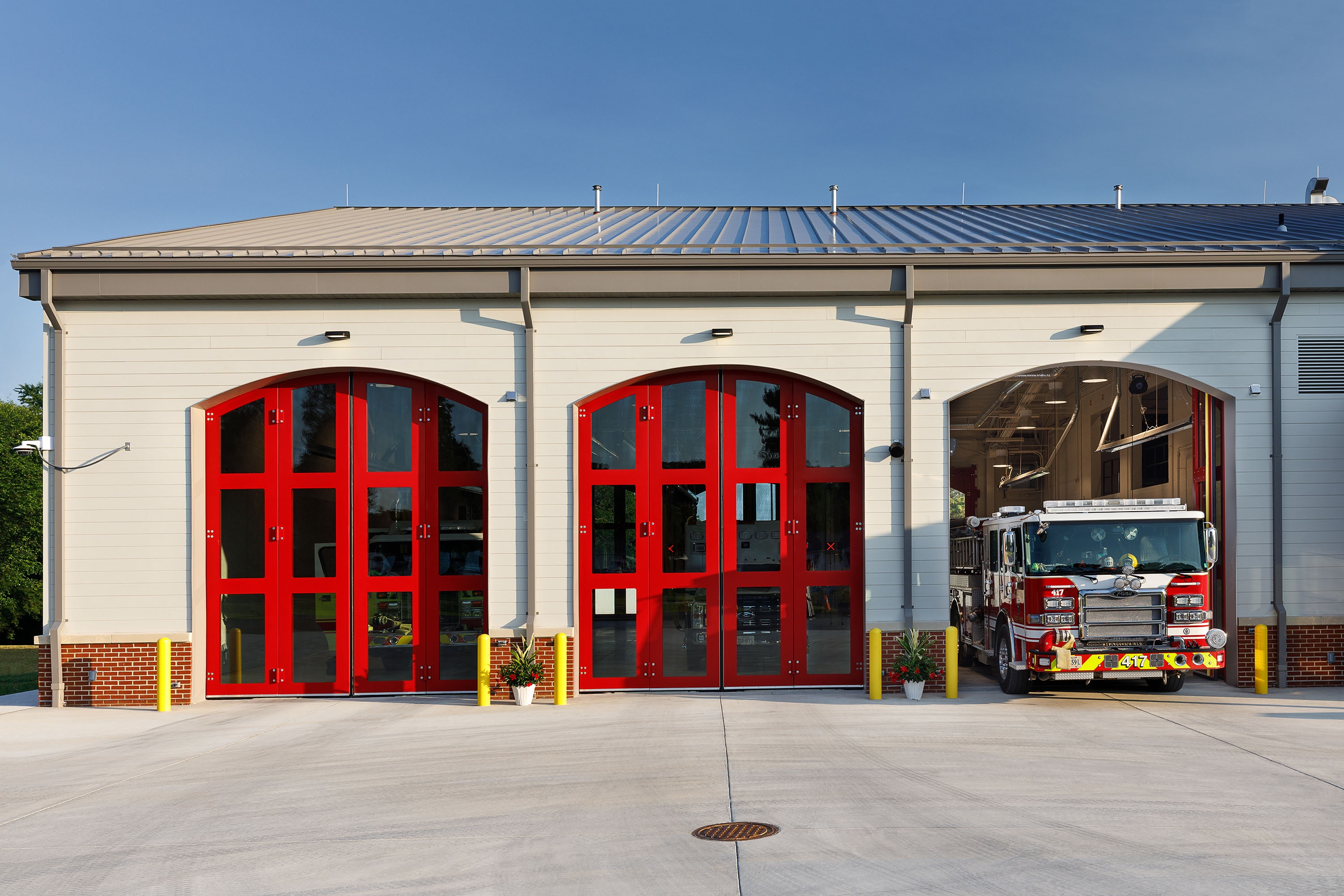
The station, which has served Richmond's Carytown district since the 1940s, was fully replaced to meet contemporary firefighting demands while maintaining the deep community connections the building has long held. At 17,000 square feet, the new three-bay facility was built on the same historic site following demolition of the previous structure.
"Earning this recognition is a significant milestone for our department. Our job is to protect people, including our firefighters, and Station 12 reflects that. It's safer, healthier and built for the future." <p class="testimonial-name">Richmond Fire Chief Jeffrey Segal</p>
Sustainability by Design
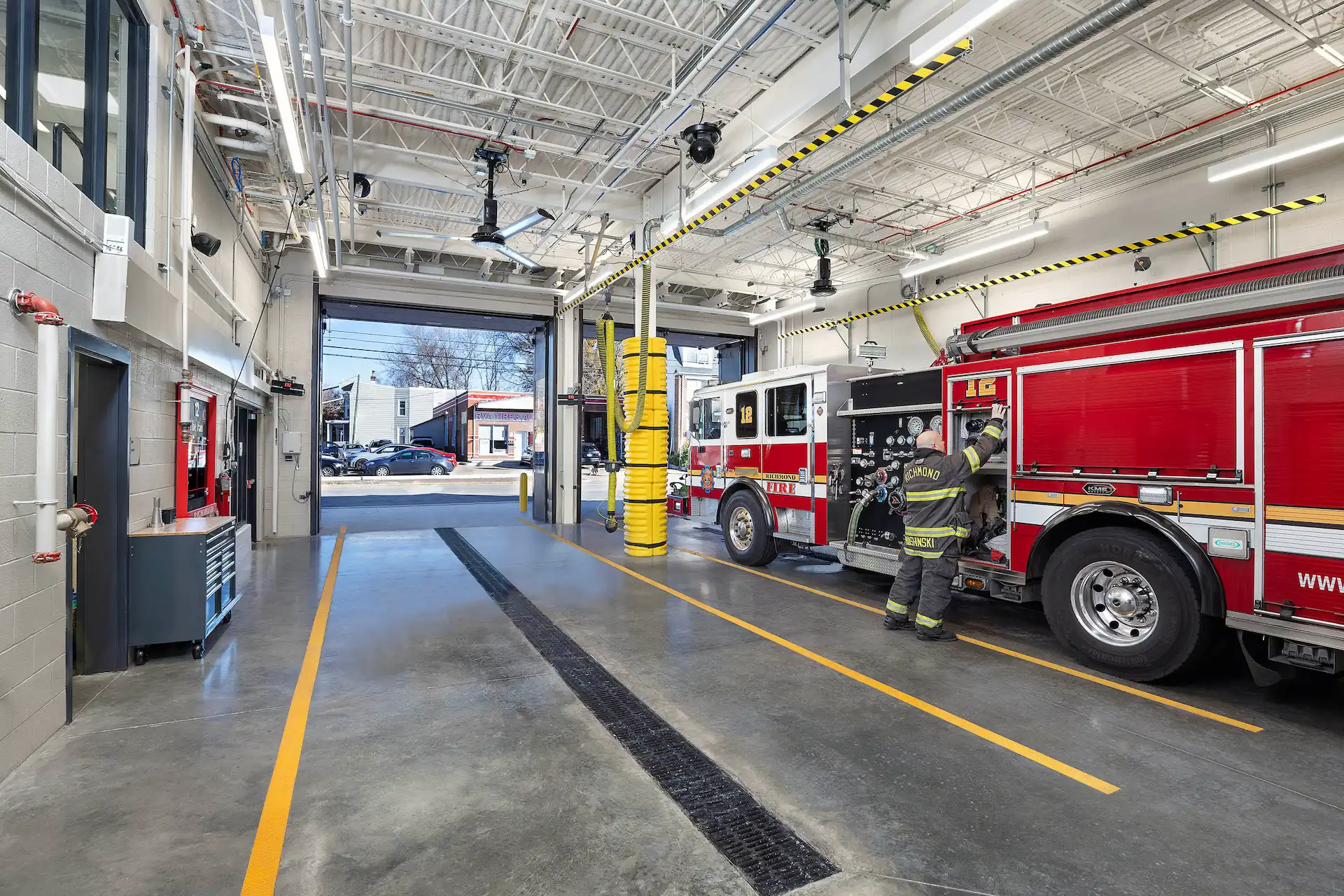
Sustainability was a foundational priority from the earliest stages of design. The project incorporated advanced ventilation systems to improve indoor air quality; specialized exhaust systems in the apparatus bay to reduce firefighter exposure to harmful contaminants; and a spatial zoning strategy that separates potentially contaminated areas from living and working spaces. Dedicated decontamination facilities, extractor equipment, drying cabinets and turnout gear storage further reduce carcinogen exposure, a critical consideration given firefighters' elevated cancer risks.
"Firefighters already absorb enormous risk on the job. The design of Station 12 starts from the recognition that the building should reduce that burden, not add to it. Every decision about zoning, ventilation and contamination control traces back to that commitment," said Moseley’s Principal Chris Roman.
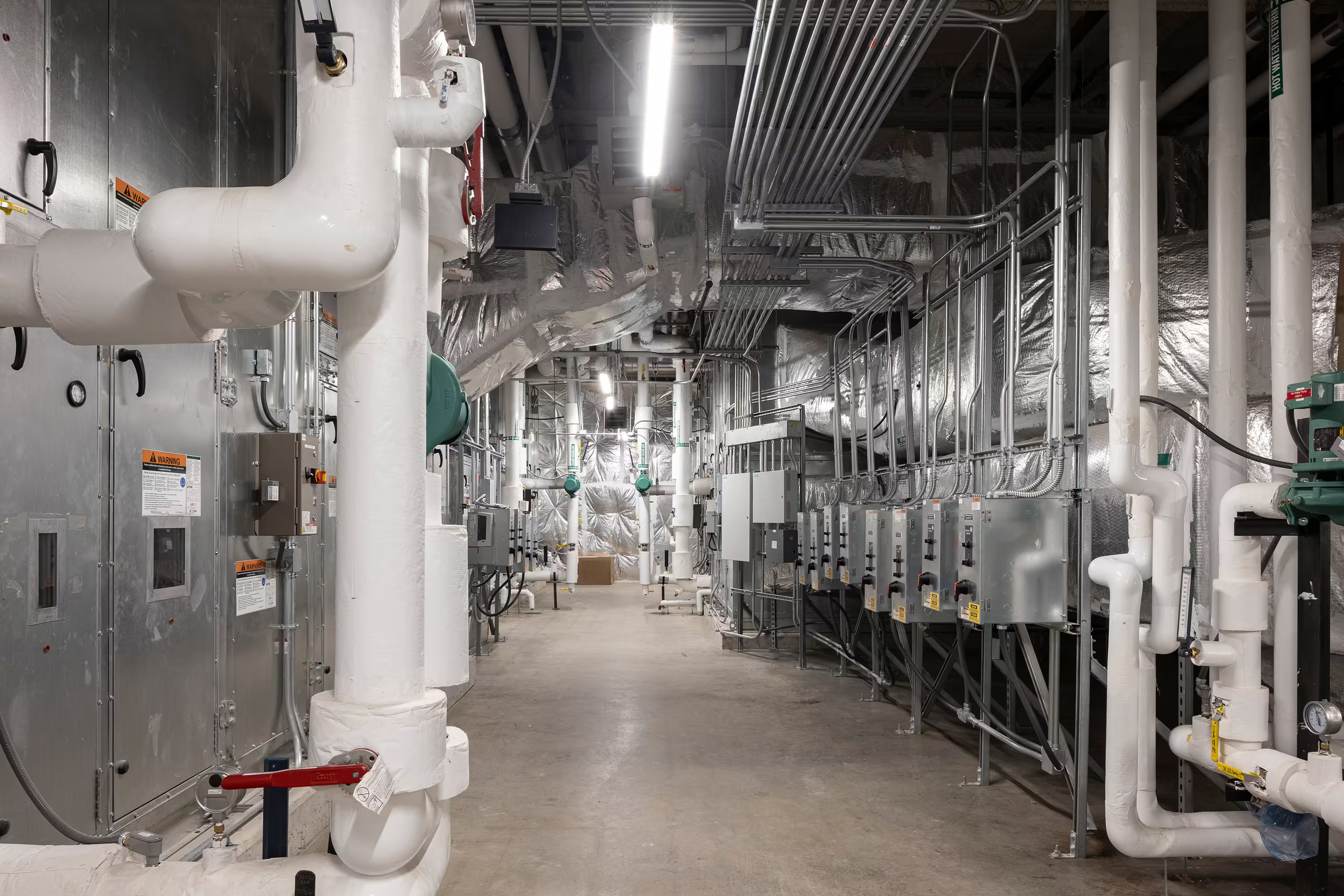
Energy performance systems include radiant slab heating in the apparatus bay, demand-controlled ventilation, and fully dimmable LED lighting. Energy and water submetering support long-term operational accountability. The roof structure is photovoltaic-ready, allowing for future solar installation, and a backup emergency generator maintains operational capacity during outages. Water-efficient strategies and light pollution reduction measures round out the project's environmental commitments. Building systems and the building envelope were fully commissioned to confirm real-world performance.
"A lot of work goes into a project like this that people don't always see," said Director of the Department of General Services Gail Johnson. That includes the work led by our project manager, Dexter Goode, and the coordination across teams to bring everything together. The redevelopment of Station 12 shows what's possible when sustainability is built in from the very start."
Firefighter Health and Wellness
The design also reflects a strong commitment to firefighter wellness. The second floor contains living quarters, individual sleep rooms, a kitchen, day room and a dedicated respite room for mental health and decompression. Natural daylight and exterior views are woven throughout the facility. Biophilic design strategies, including a large-format mural of the James River spanning the stairwell, outdoor terraces on the second and third floors, and natural patterns and textures throughout the building, reinforce connection to the natural environment and support occupant well-being.
"Sustainability here is not abstract. It is deeply human. It is about protecting the health of the people who protect our communities," said Moseley’s Director of Sustainability Planning Bryna Dunn.
Community Connection
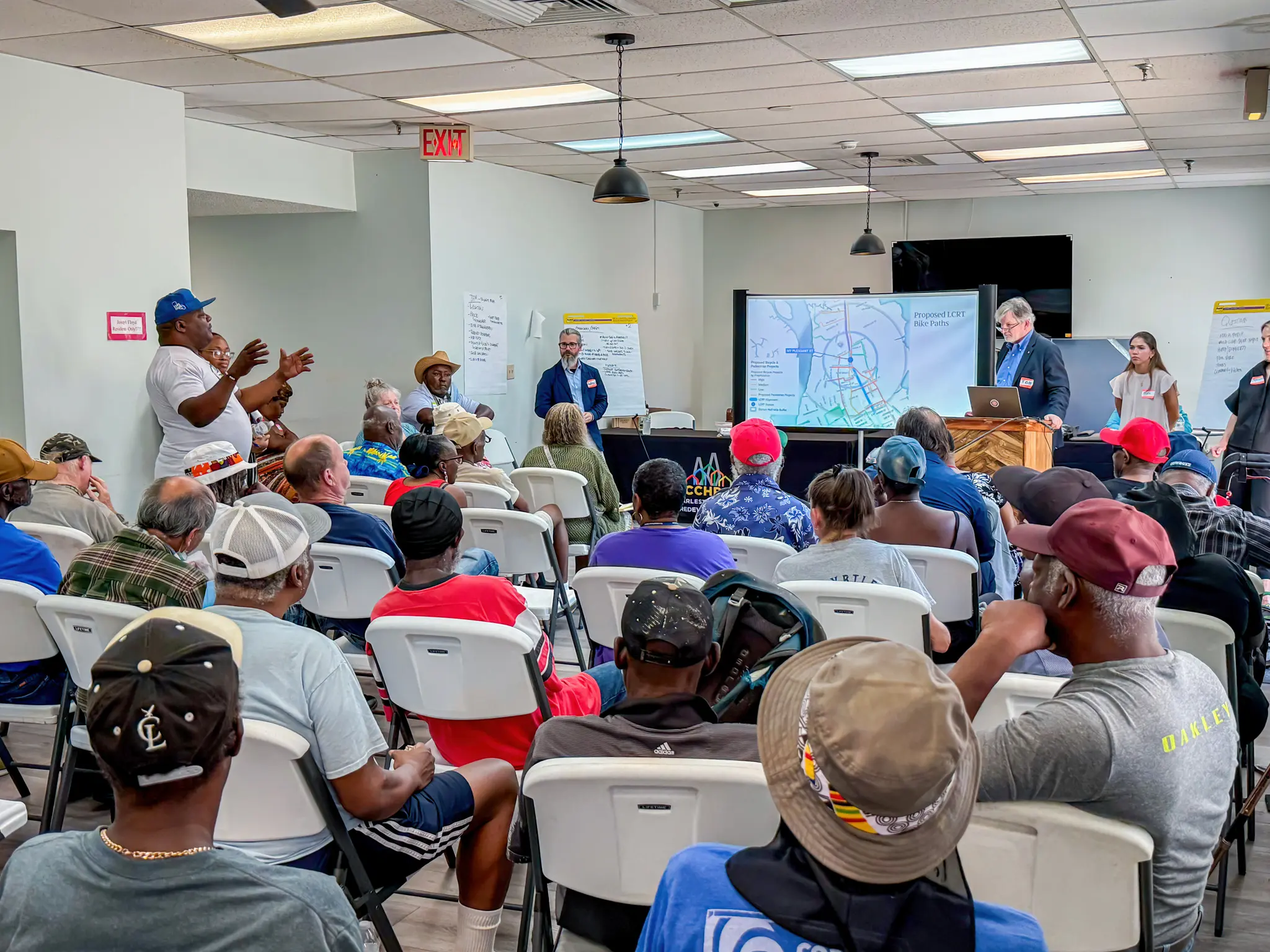
The station's third floor introduces a dedicated community space open to the public, accommodating neighborhood meetings, educational programming and informal gatherings. Design meetings during the COVID-19 pandemic were conducted virtually, and the extensive community engagement process shaped the building's direction, leading to design decisions that balance emergency response capabilities with the station's long-established role as a neighborhood gathering place.
The architecture responds to Carytown's scale, with proportions that complement the district's two-story commercial buildings. A canopy maintains compatible scale with neighboring structures. Locally commissioned artwork is integrated throughout, including a facade piece featuring a firefighter's ladder and a mural depicting Richmond's James River Railway Bridge. Bike racks shaped like Dalmatian dogs blend function with neighborhood character.
Advancing Richmond's Climate Goals
Fire Station 12 directly advances the goals of RVAgreen 2050, Richmond's long-term plan to reduce the city's environmental impact and build climate resilience. The project's commitments to energy efficiency, water conservation, healthy indoor environments and multimodal access reflect priorities the plan identifies as central to a more sustainable city.
"RVAgreen 2050 is about how we reduce our environmental impact and build a more resilient city over time," said Richmond's Director of the Office of Sustainability Laura Thomas. "Projects like this are where those goals start to take shape in a real, tangible way, and we're proud to see that reflected in a facility that supports our fire department."


.webp)


























.avif)