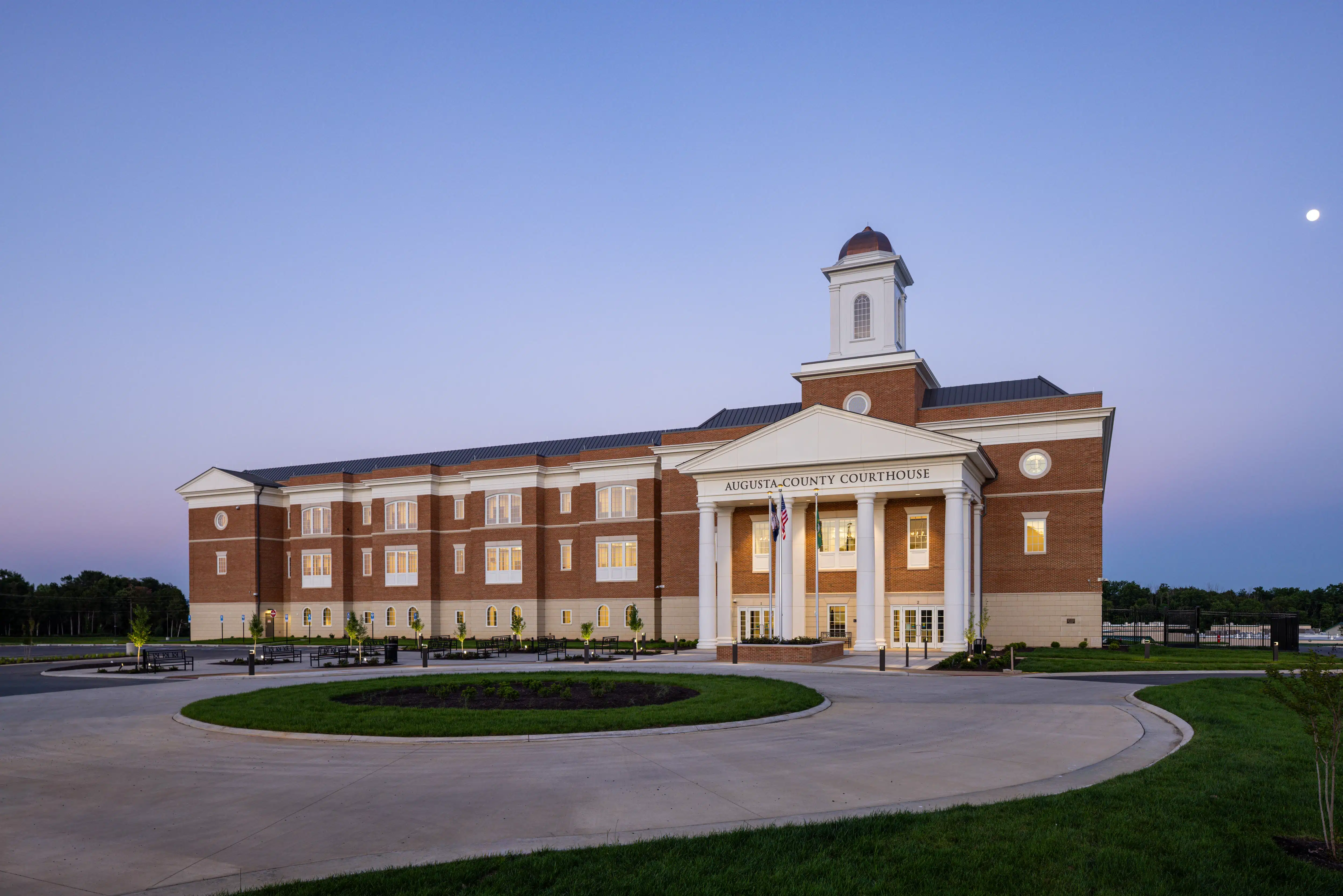
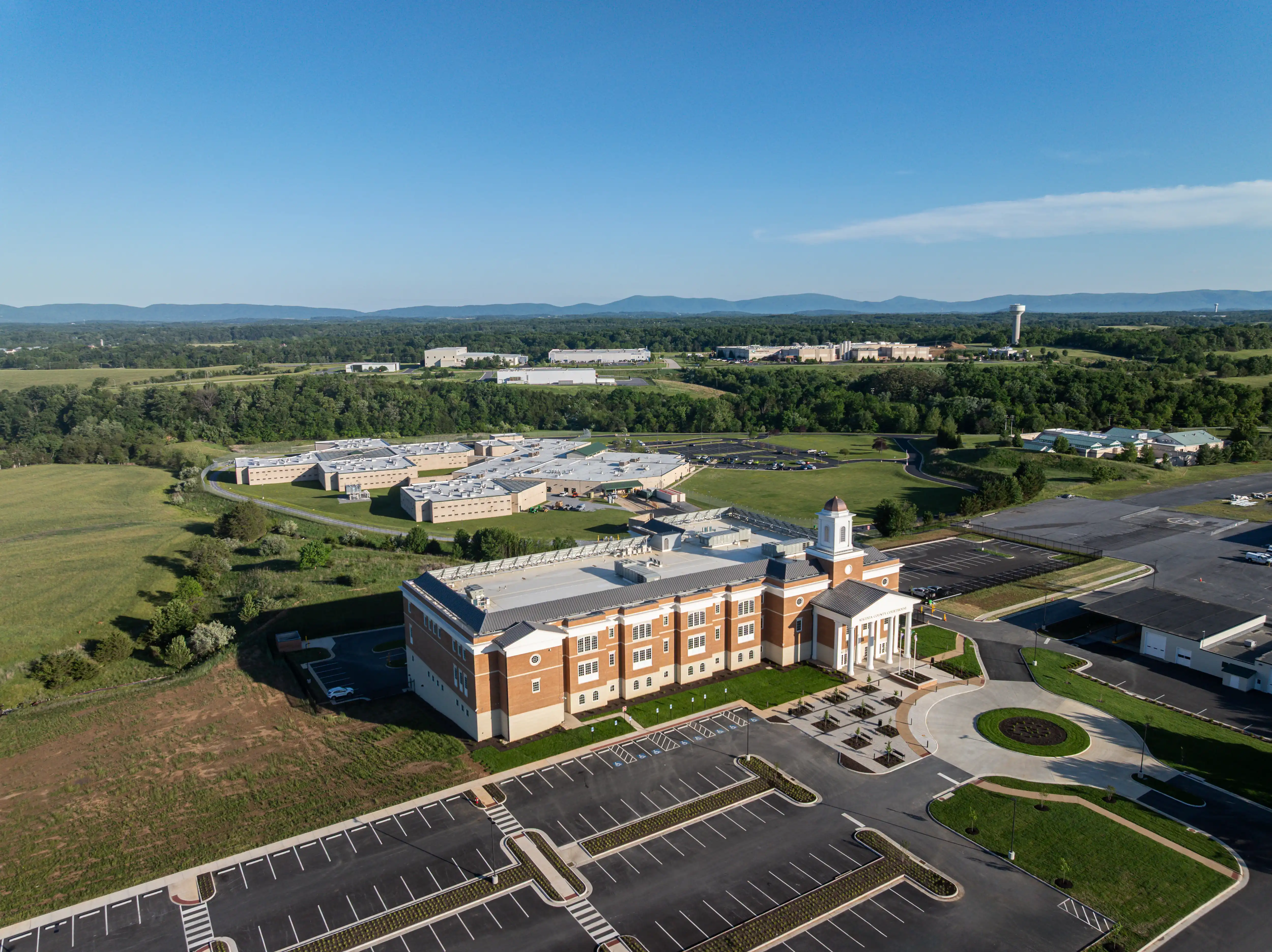
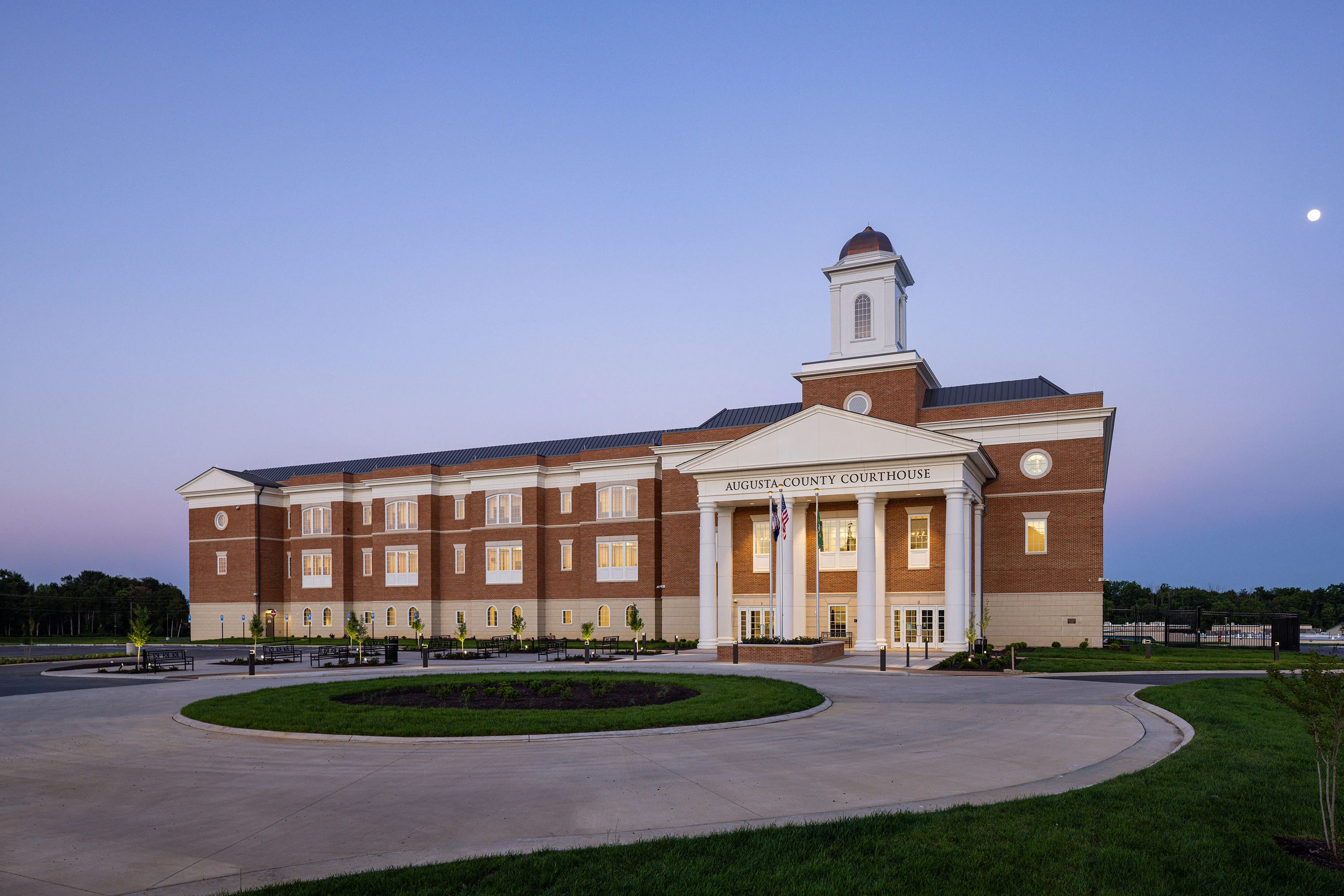
For the first time in 288 years, Augusta County has a courthouse on its own soil. The 124,000-square-foot facility in Verona completes the county's government campus and relocates the county seat after a planning process that began in 1987. Augusta County marked the milestone June 3, 2026, with a ribbon cutting ceremony and public open house attended by approximately 500 residents.
Six Courthouses, Three Centuries
Since 1745, Augusta County has built six courthouses, each reflecting the region's growth and shifting needs. The 1901 circuit courthouse in Staunton guided judicial proceedings for more than a century, but expanding court dockets and evolving security requirements eventually outpaced what the building could provide. County leaders responded by commissioning the first of many space analyses that would ultimately produce the facility dedicated today.
Moseley completed that first assessment in 1987, identifying a requirement for 268,000 square feet of government space and recommending that county agencies relocate from downtown Staunton to Verona. The following year, Moseley developed the Augusta County Government Center Master Plan to guide the transition. County administration offices moved to the Verona campus in 1990, followed by social services in 1992.
Between 2002 and 2015, seven detailed studies and 13 different boards of supervisors worked through the county's judicial space needs. The sheriff's office moved to Verona in 2004, the juvenile detention center in 2005, and the regional jail in 2006. In November 2022, more than 30,000 residents voted in a referendum, with 86 percent supporting construction of a new courthouse in Verona.
"Today's courthouse was built with tomorrow in mind," said Augusta County Board of Supervisors Chair Jeff Slaven. "The courthouse marks a defining moment in our county's history, bringing together law enforcement, government, and judicial services in one centralized location. This will serve the county well for generations to come."

Architecture and Space Planning
The courthouse ranks among the largest capital projects in Augusta County history. It houses all three county courts and their clerk offices: the circuit court, general district court, and juvenile and domestic relations district court, along with the Commonwealth's Attorney's Office, the Victim Witness Advocacy program, the Court Services Unit, and the magistrate's office. More than 100 staff members occupy spaces configured for their specific functions.
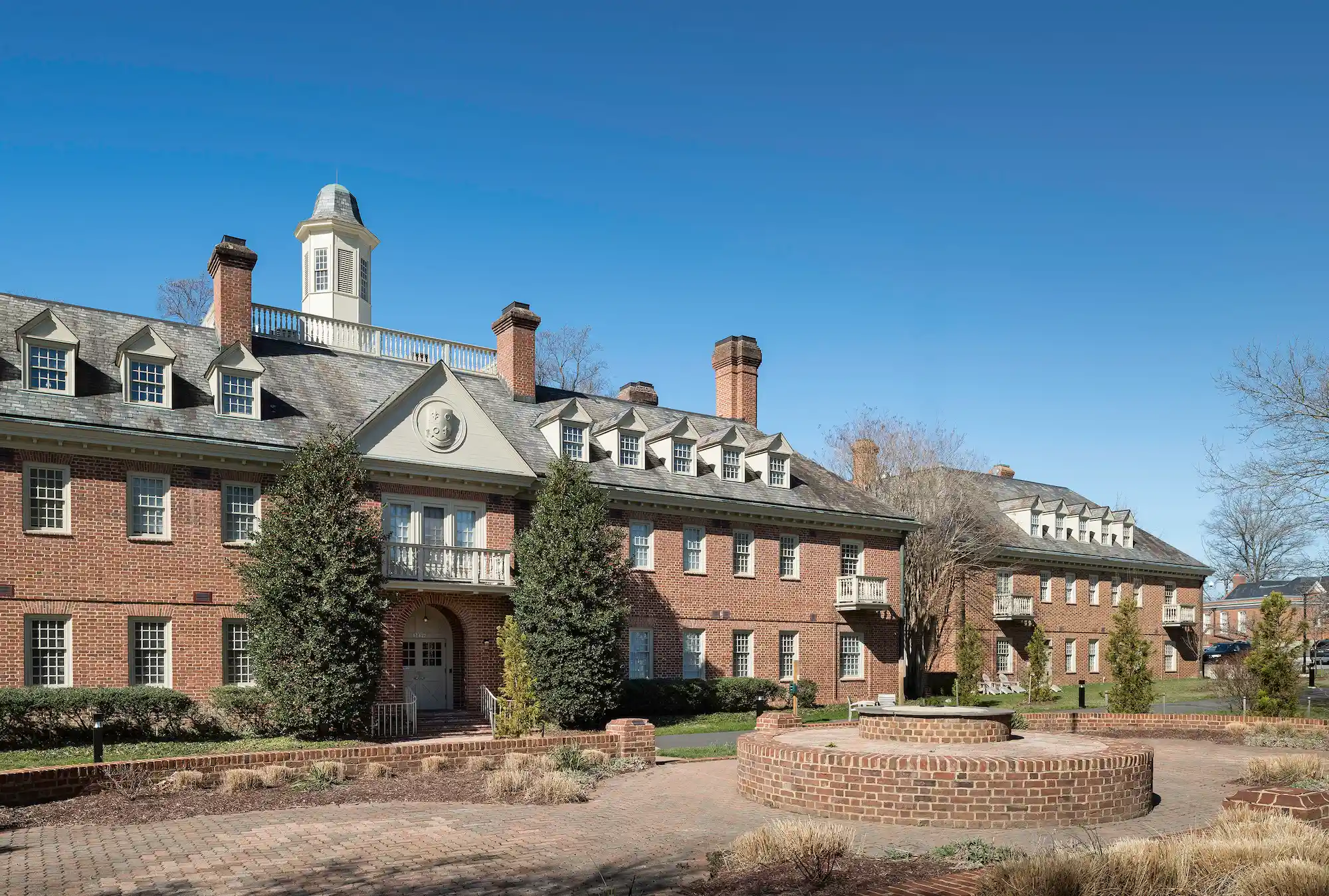
The exterior draws from the 1901 circuit courthouse in Staunton: red brick, white trim, four white columns, a triangular pediment, and a cupola. Inside, public, private, and secure zones follow separate circulation paths, preserving the integrity of judicial proceedings at every level.
Eight courtrooms span four floors. The general district court, clerk offices, and main record room occupy the first floor. Juvenile and domestic relations proceedings fill the second. The circuit court, commonwealth's attorney services, and victim witness support occupy the third floor, where the circuit court civil courtroom also serves as a jury assembly room.

Security and Campus Integration
The lower level provides controlled access and dedicated parking for court personnel. The courthouse sits less than half a mile from the sheriff's office, juvenile detention center, and regional jail, with direct connections to each. That proximity enables secure detainee transport and, for the first time, unites every component of Augusta County's justice system on a single campus.
"Consider that for the first time in nearly 300 years, the seat of Augusta County will stand outside its historic location in downtown Staunton," said Augusta County Circuit Court Judge Shannon T. Sherrill. "This building will outlast all of us who first occupy it, and that is precisely the point: Courthouses transcend generations, and as judges, clerks, and attorneys come and go, the courthouse is among those institutions that tie each generation to the next."
Financial Stewardship
Disciplined fiscal management held construction costs below the original $80 million estimate. Long-term borrowing needs dropped to $67 million, and direct purchasing agreements for critical materials and services produced more than $500,000 in additional savings.
"Today, with the opening of this courthouse, we complete the final phase of the vision started nearly 40 years ago," said County Administrator Timothy Fitzgerald. "Today, we centralize the administration for all of our essential services for the county, in the county."


.webp)





























.avif)