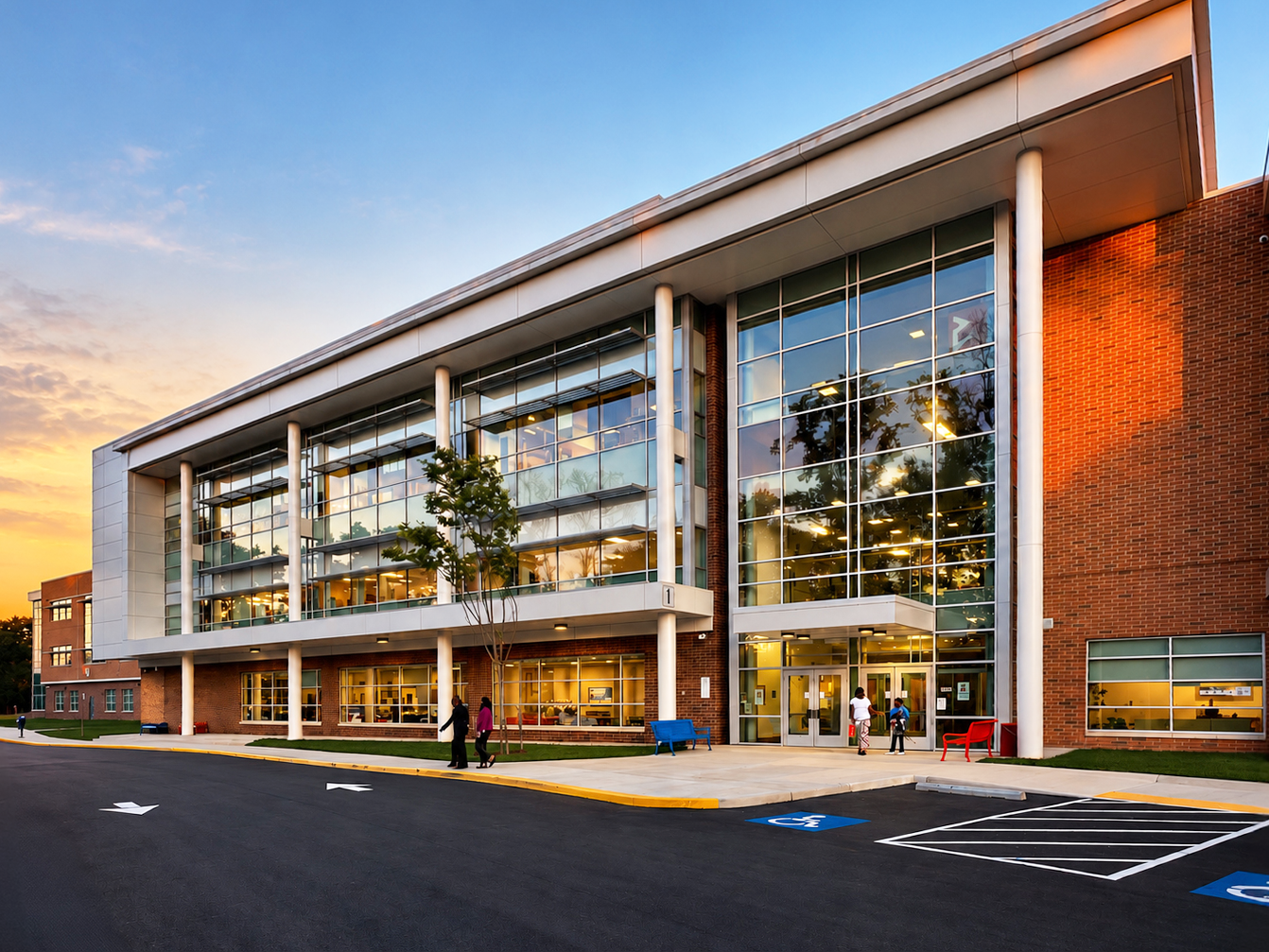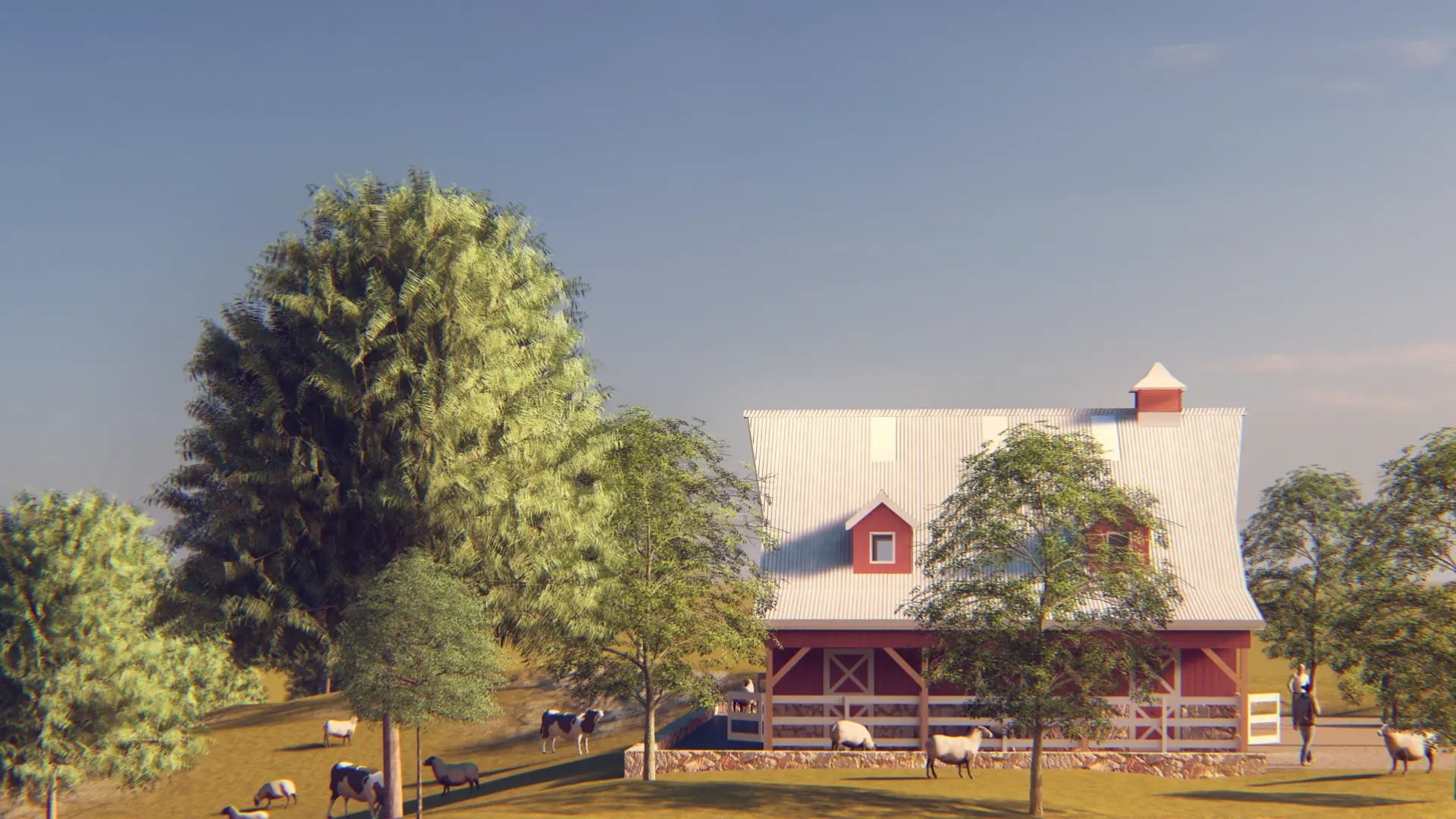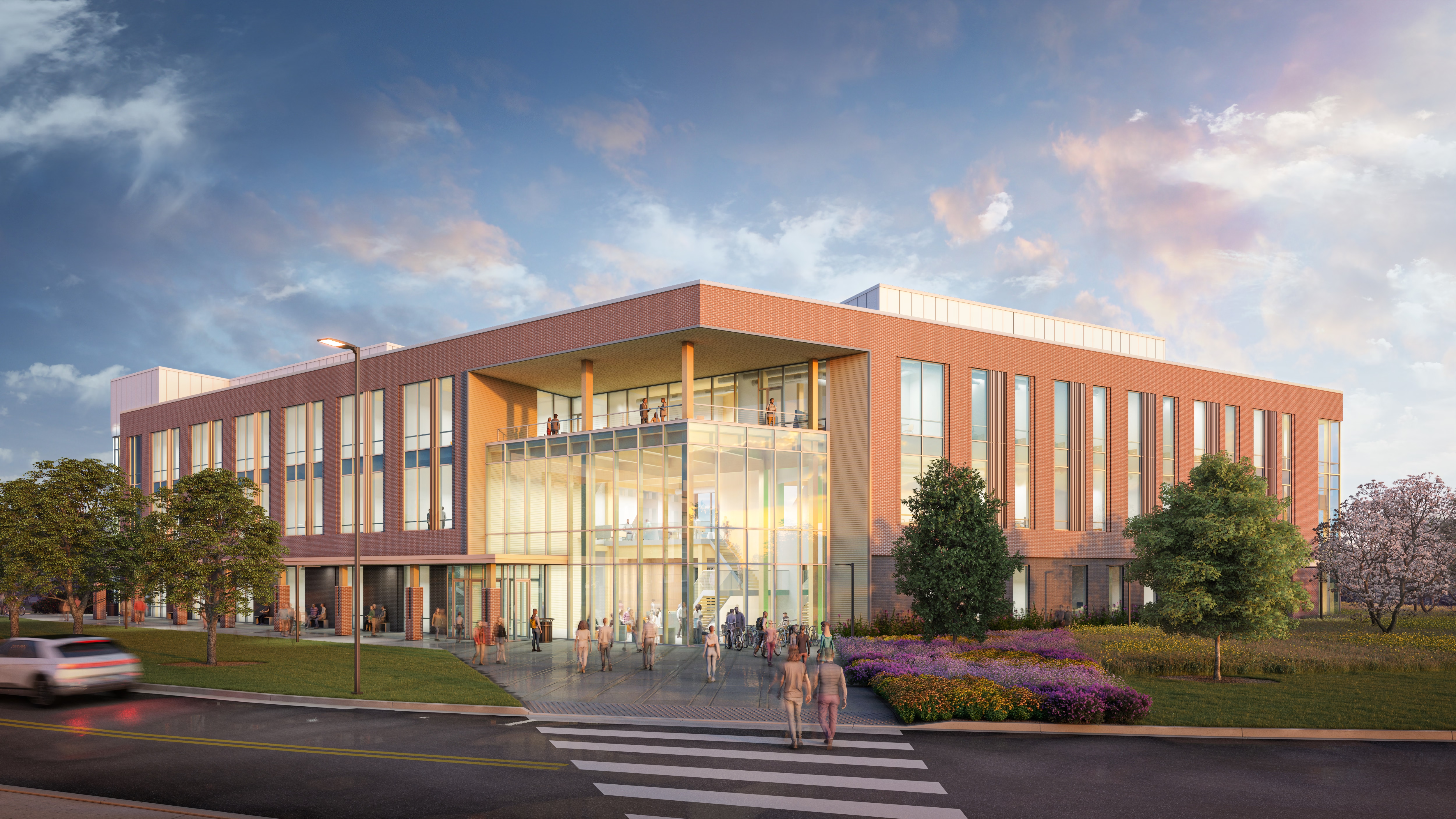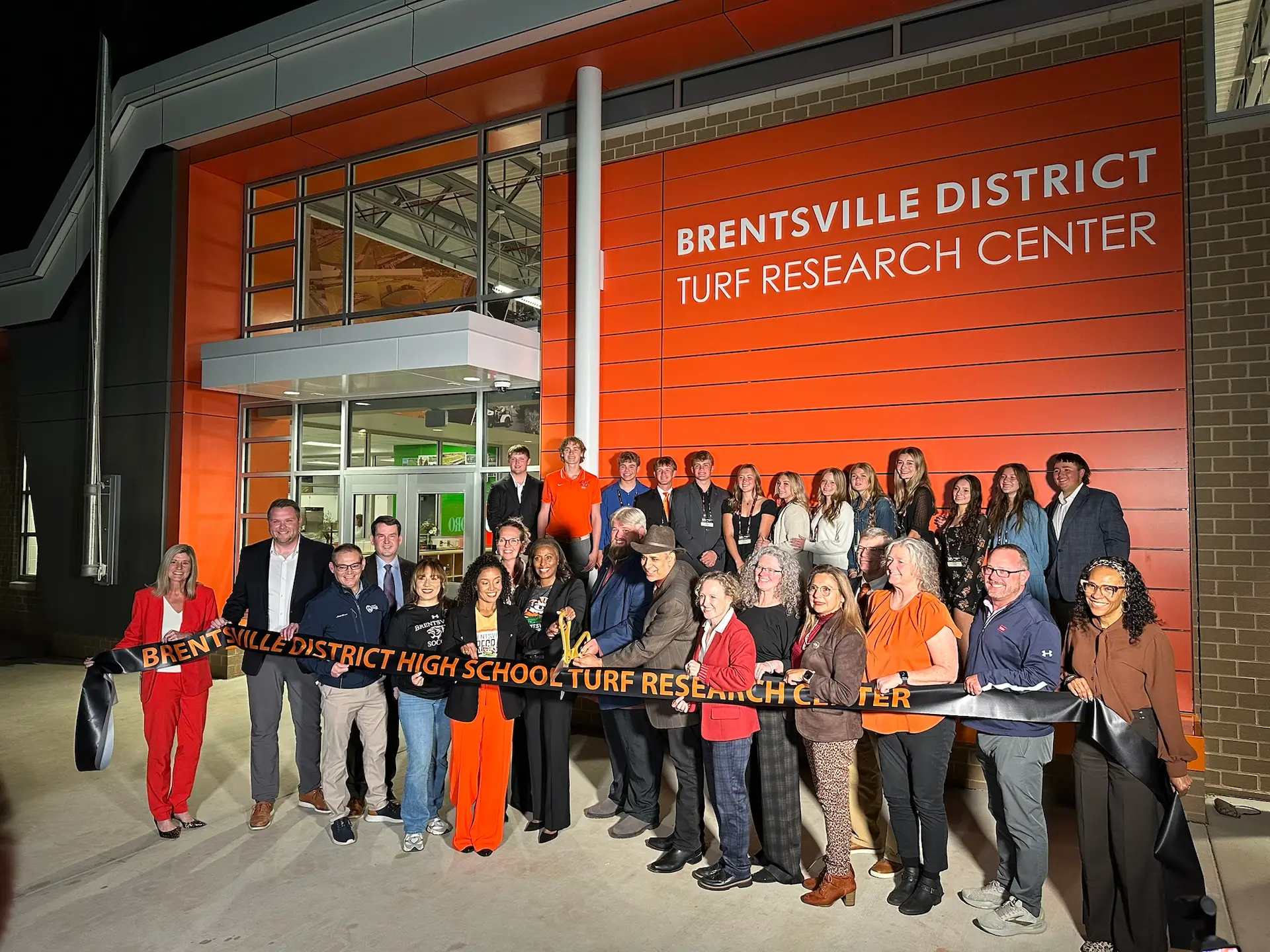
Prince William County Public Schools opened the Toro Turf Research Center at Brentsville District High School on Oct. 22, 2026. Designed to offset 100% of its electricity use with rooftop solar, the building is Moseley's first net-zero energy project.
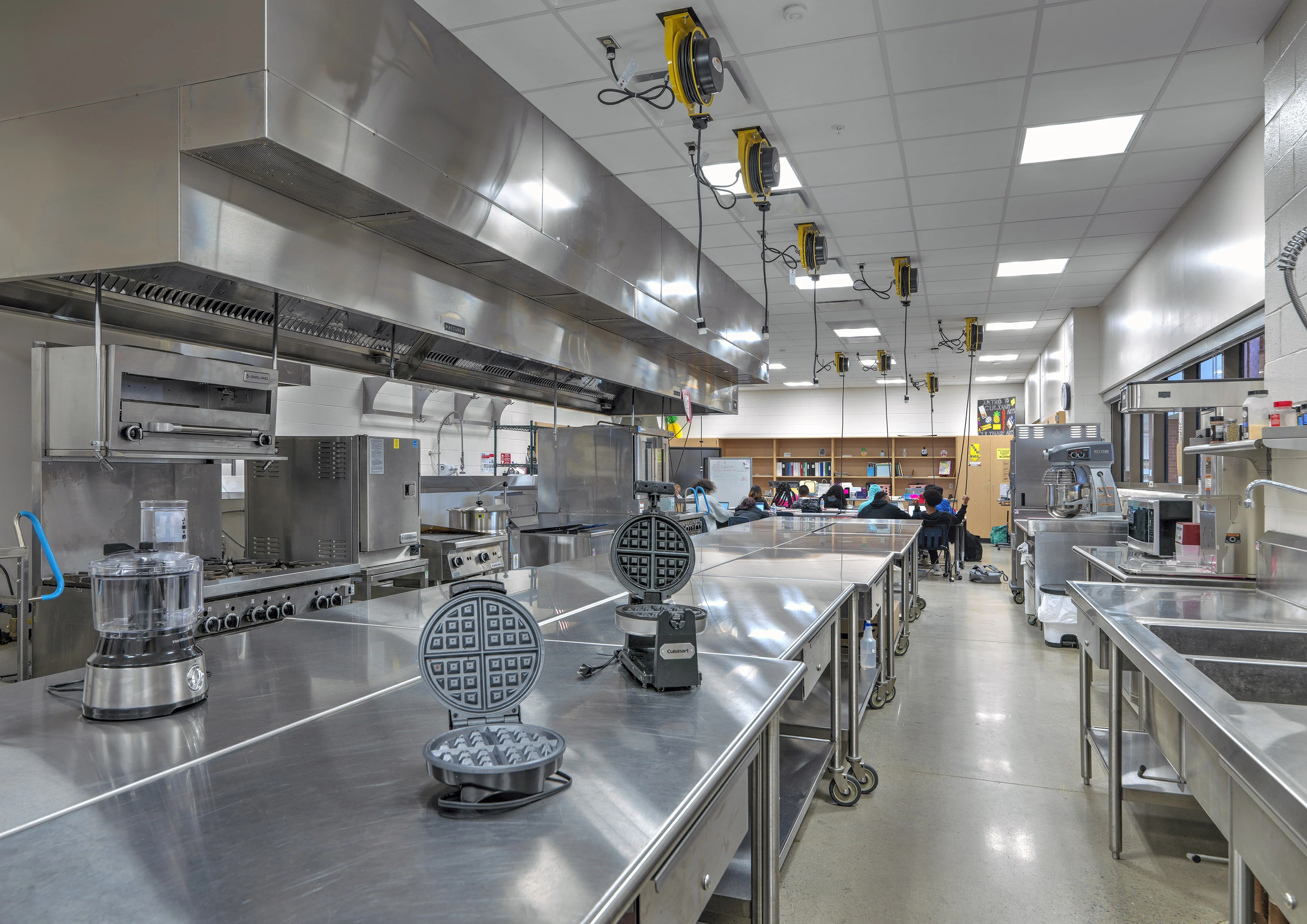
The center gives the Brentsville Turf Toro Grounds Academy, the school's nationally recognized turf management program, a dedicated home. Led by director Dr. Drew Miller, the academy previously operated within the existing high school. Its students maintain the school's football and baseball fields and have earned the Sports Field Management Association's National Field of the Year recognition. In the new laboratory, classroom and workshop, they gain hands-on experience in turf management, water management, and soil testing.
"We are demonstrating that career and technical education is not an alternative to academic excellence. It is academic excellence in action," said Dr. LaTanya McDade, superintendent of Prince William County Public Schools.
Virginia Tech and Penn State have committed to conducting research trials at the center, where students will work alongside university researchers. In his remarks at the opening, Babur Lateef, chairman at-large of the Prince William County Public Schools School Board, recalled that Dr. Miller proposed the facility because grass seed grown in this part of Virginia is hardy enough for both northern and southern climates. Industry scientists test seed along a belt that starts in Virginia and runs west toward Tennessee.
"When most people look at a field, they see grass, but here at Brentsville District High School, our students see possibilities. They see science, innovation, discovery and a profession where their ideas and expertise can make a difference," said Lateef.
Between the Classroom and the Field
A kickoff session brought together Dr. Miller, students, the principal and the design team to define how the building would serve the program. The site needed to sit close enough to the high school for students to use the center during the academic day, yet next to the athletic fields it serves.
From the start, the program called for three primary spaces: a workshop, a classroom and a laboratory. Through an integrated design process, the team shaped a high-ceiling building around these spaces while providing roof area for an extensive solar array.
Sustainable Systems as Curriculum
"We wanted the building itself to serve as a teaching tool for students and staff. By leaving systems such as rainwater collection and reuse visible, we create opportunities to connect everyday experiences with lessons about sustainability. Students can see how rainwater is captured from the roof and routed to an enclosure beside the outdoor classroom, then learn how that water can be reused throughout the facility," said Kenny Durrett, Moseley's design principal for the project.
A 90.75 kW DC solar photovoltaic system on the roof is designed to offset 100% of the building's electricity use, and students can monitor its performance data. Prince William County Public Schools already holds sustainable design standards for its buildings, and the Turf Research Center raises the performance benchmark for the district's future projects.
The net-zero energy goal required close coordination across design disciplines to ensure sufficient roof area for the solar panels needed to offset the building's projected energy use. As energy load calculations evolved during design, both the number of panels and the roof area needed to hold them changed accordingly. This iterative process shaped the building's large roof overhangs, turning a practical energy requirement into a defining architectural feature that also shelters the outdoor classroom.
"Reaching net zero is a milestone for Moseley's engineers. A net-zero building leaves no margin for guesswork, so our engineers and architects revisited the energy model and the roof design together as the building's loads came into focus. We will carry what we learned here into our work with other school districts that want their buildings to produce the energy they use," said Shawn Ruehl, director of mechanical, electrical, and plumbing engineering at Moseley.
Lower Carbon on a Modest Footprint
Along the shared property line, native plantings replace grass. The buffer increases on-site carbon sequestration potential by approximately 64% over a 65-year period and gives students a living laboratory for ecological study. The plantings also help reduce the heat island effect and restore on-site habitat. Through modeling studies comparing the initial and final designs, the design team reduced embodied carbon without giving up program space.
Inside, materials with low volatile organic compound content, along with LEED-compliant lighting and daylighting strategies, support indoor environmental quality for students and staff.
Learning Beyond the Classroom
The center's soil testing capabilities let students provide technical support to local residents and businesses. A planned graphic will explain the academy and its focus areas: sports field management, turfgrass science, research and testing, soil science and equipment technology.
“It’s exciting to help bring PWCS’s vision for the future of education to life through Moseley’s first net-zero energy project. By pairing turf management career training with hands-on learning about solar power and rainwater reuse—all within a daylit, healthy learning environment—this building shows how the places we design can become part of the education they support," said Bryna Dunn, director of sustainability at Moseley.